Showing posts with label patrones. Show all posts

Wednesday, December 16, 2009

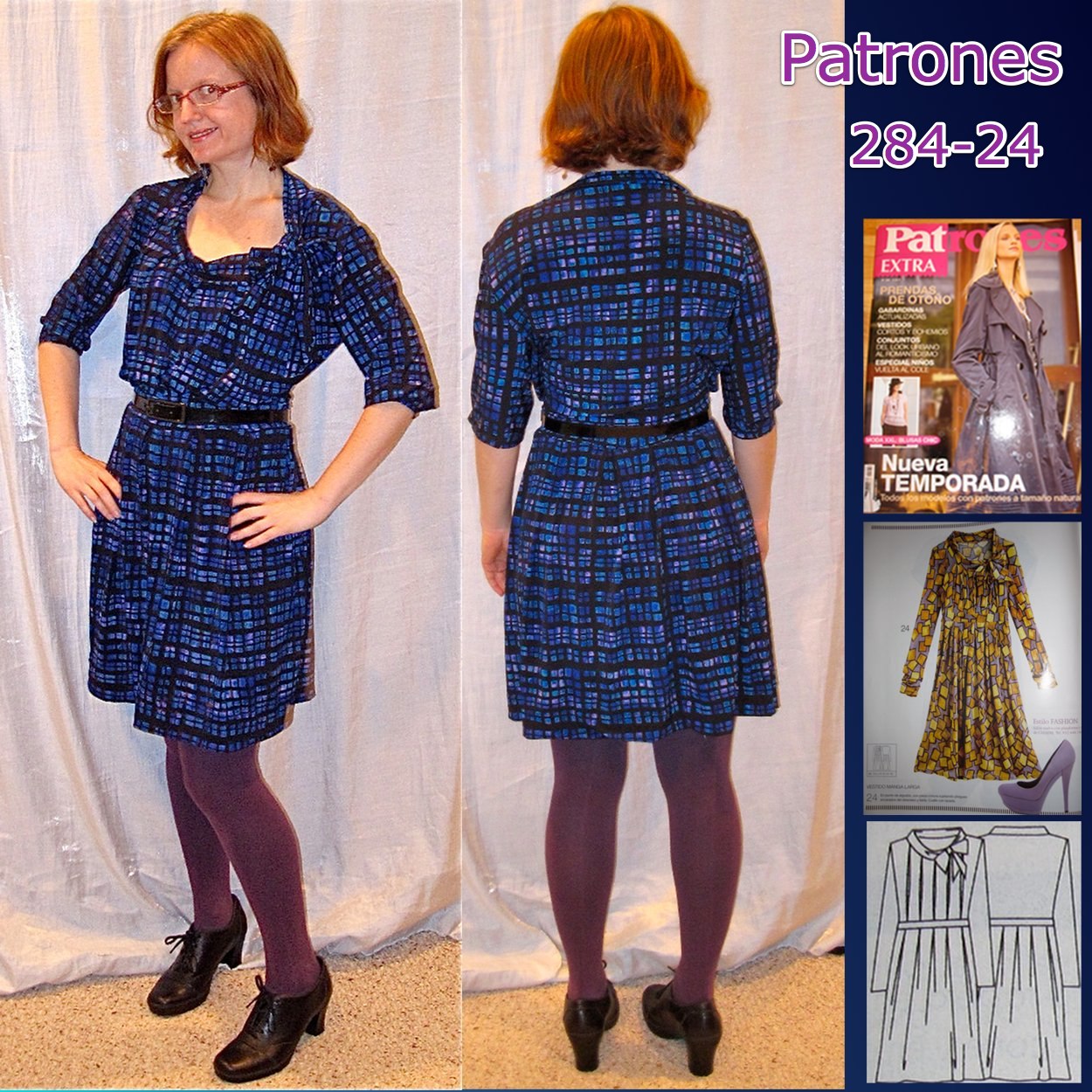
Patrones 284-24, Twenties Inspired Knit Dress

Patrones 284-24 Thumbnail

Patrones Haul from Spain While I was in Spain I managed to find three issues of Patrones. The first (the one this dress comes from, which was the most recent at the time) I picked up my first night at a regular ol' newsstand on Las Ramblas in Barcelona. This is the main tourist drag, not exactly a hotbed of sewing. Can you imagine being able to get Patrones at whatever newsstand you happen to pass? Crazy! The other two I found in the train station in Sevilla. Random back issues of Patrones, just sitting there. I bought two copies of each, one for me and one for Cidell. The woman working the newsstand was baffled, but I explained that I had una amiga who wanted them also.

Patrones 284-24One of the things that's great about Patrones is the photography is appealing and fashion-y (not catalog), but at the same time actually shows the clothes. What a novel idea. Alas, this dress came from a spread where the dresses were just laid out flat, so I couldn't tell what it would look like on a person. However, it looked cute, I loved the line drawing, and it seemed well suited to some fabric I'd gotten from G Street's $2.97/yd table back in October so I traced it out. Although I can translate Patrones instructions without too much trouble, there was nothing confusing about this so all I checked was the collar application (fold in half, right sides together, and stitch across short ends and to markings for tie ends; turn right side out, fold wrong sides together along unfinished edges and serge to the neckline).

Although I knew I was going to sew down the pleats in the Burda 06-2009-101 knit dress, I wasn't sure how I was going to handle the front bodice pleats here. Sewing them shut would defeat the purpose of the design, but I also didn't want any bagginess. I sewed them about 3/4 of an inch past the seam line at the top and bottom before putting the dress together. While I normally hate baggy, somehow I really like the look of these blousy pleats. They have a bit of a 1920s vibe. I always feel like the 20s are due for a revival, and there is usually something on the runway to evoke them. For Spring 2010 Proenza Schouler had an art deco vibe going in some of its pieces; here's another look from Balmain. Nobody really went full on 20s inspired (though I haven't looked at all the shows), but the ideas are there.

I was somewhat short on fabric based on what the pattern called for, so I did not use the skirt pattern. My fabric was 60 inches wide, so I just cut a rectangle and then eyeballed approximately even pleats all around. It was a little fussy and I probably could have just used the pattern and saved myself some trouble, but the skirt flows well and is fun to wear so whatever.
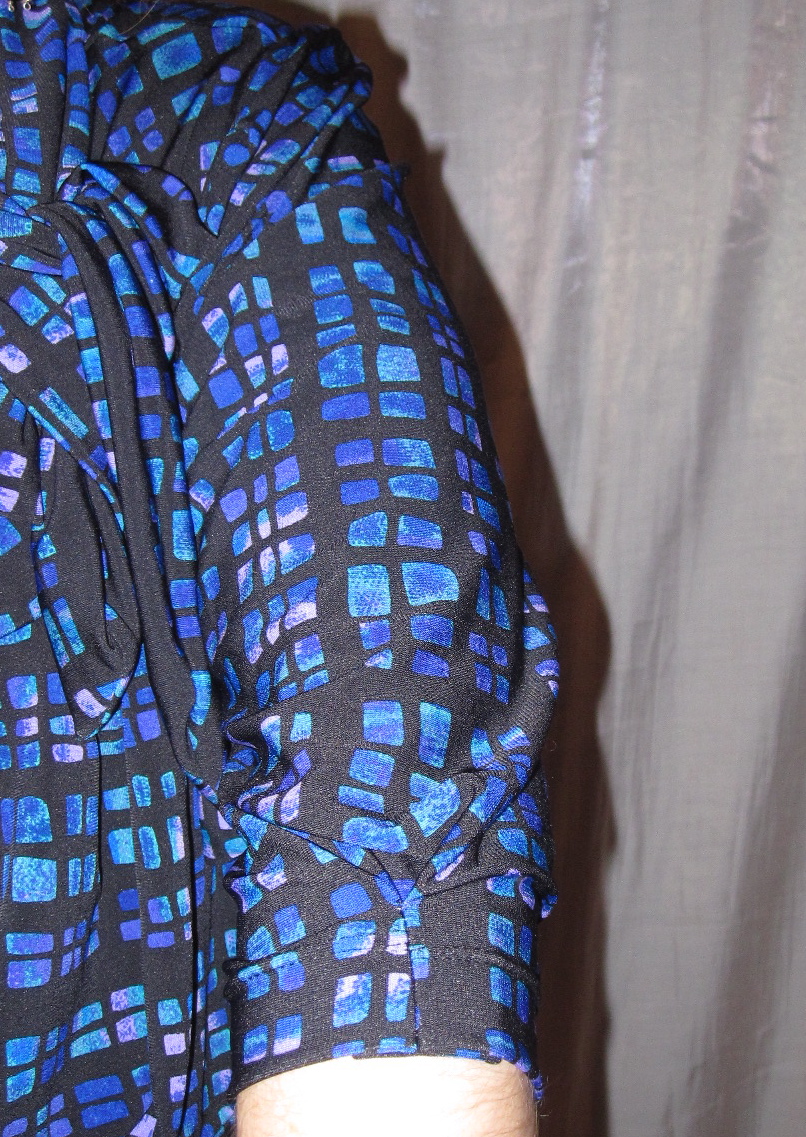
Sleeve CloseupThis pattern is called "Vestido Manga Larga," which means "Dress with Long Sleeves." I had to cut the sleeves on the cross grain due to my somewhat limited fabric, but I have not noticed any ill effects. Because I was cutting on the crossgrain I had plenty of room for length and cut them really long. I do the sleeve and lower hem last on a project, so I was fussing with the sleeves trying to get them to look right. I experimented with gathering them up or having them very long but it just wasn't looking great. Finally I pinned them up to 3/4 length and WOW what a difference it made. It reduced the target age for the style by at least 10 years. It had been kind of matronly looking, and suddenly it was young and fresh. It was startling how much a small alteration changed the entire look. To add a little interest to the sleeve I added an inverted pleat at the hem. This means it is snug below the elbow, and the blousing echoes that of the bodice.
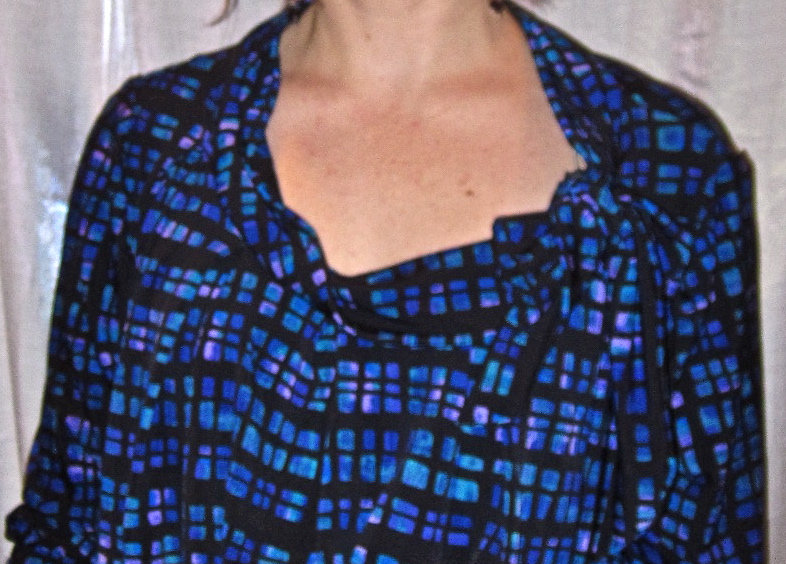

Closeup of Neck Tie What I really loved about this pattern was the loose cowl-y collar and tie. Unfortunately, the tie really disappears in my dark fabric. I'm not sure a lighter fabric would be that much better because a knit bow is always going to be floppy. It took me several experiments to tie the tie right; the key, it turns out, is not making a knot first. I keep thinking I should tie it perfectly and then hand sew to keep it from ever coming untied, but I'm not sure it will work. The tie is rather heavy when tied in a bow, which distorts the shape of the neckline a little bit and pulls it open. If you look closely you can see that my clear bra strap is a little exposed.
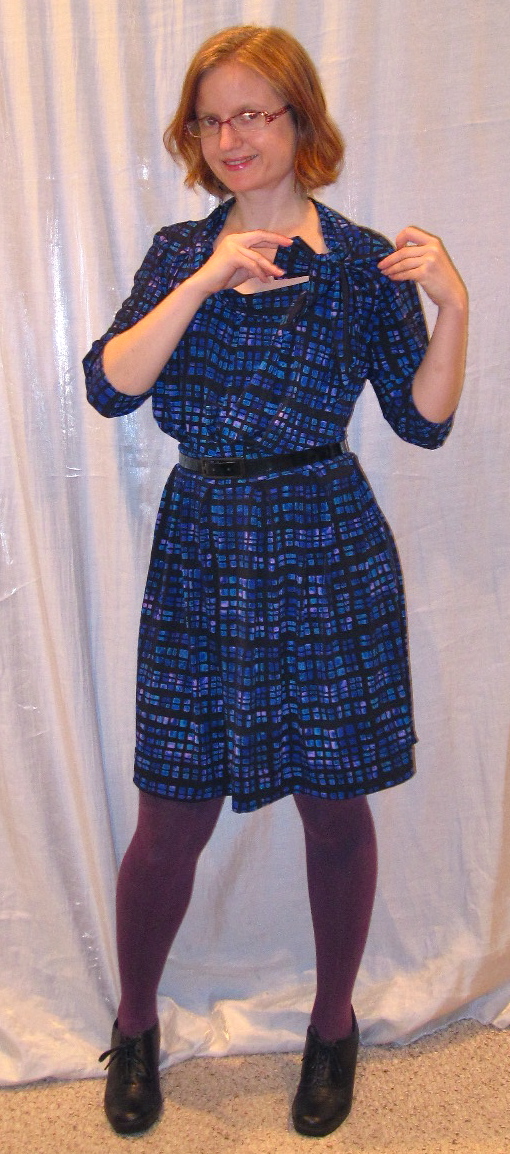
Ta Da! I am happy with the way this dress turned out. The style is fun and a little different than I would usually wear. And I'm glad to have sewn from my Patrones!

All photos are here and the pattern review is here.

Friday, March 20, 2009

Goodies!

Wrapping #9 Nara Camicie Blouse

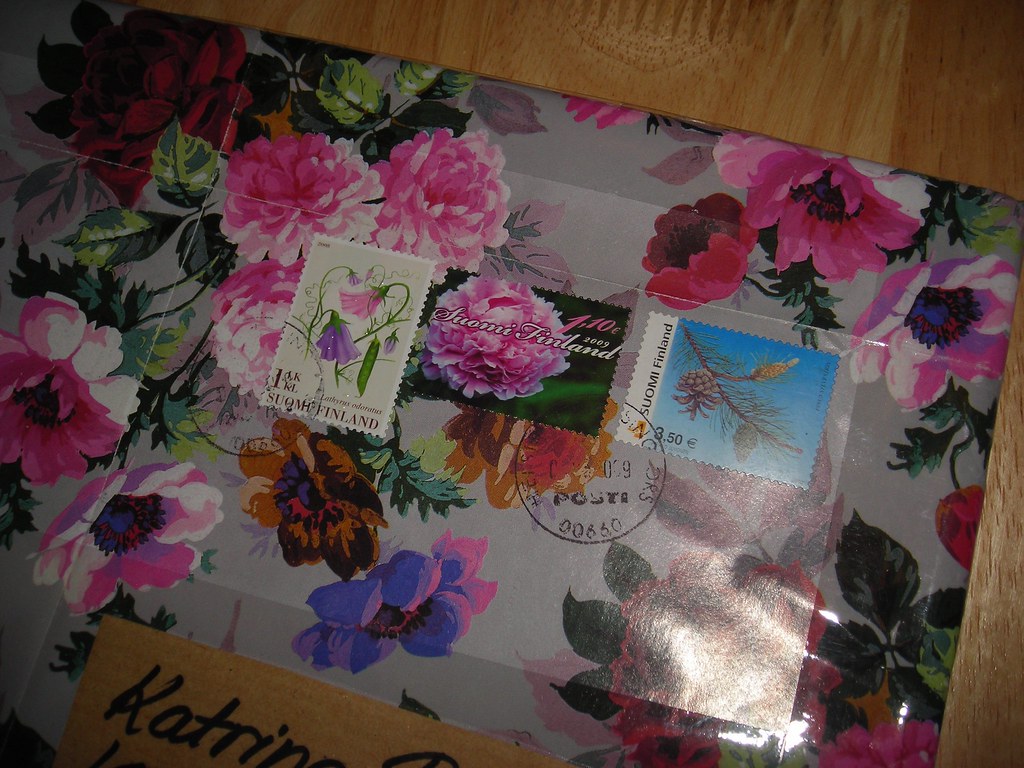
I got a present in the mail! The wrapping was so gorgeous that it felt like a real occasion to open it up. Marita at Paradise for Me had a giveaway on Patrones 274, the party dress edition, a while back and I was the winner! It has lots of great cocktail wear and some fun little dresses. My top pick is this great blouse. It's similar to fabulous BWOF 01-2008-108 which everyone, their dog, and I have made but the yoke extends all the way to the sleeves. The instructions tell you to pre-pleat your own fabric for the yoke, which is a clever idea.

=============================

G Street Fabrics, 3/14/09

I took time away from work to go to Fashion Sewing Club at G Street Fabrics on Saturday. I didn't think I was going to get any fabric because I wasn't wowed by anything, but then I saw the jersey, which is just my color. It's very thin--almost but not quite that tissue weight that was such a craze in RTW two summers ago for layering pieces (layering in summer?). I am thinking another Giambattista Valli tee, fully self lined as with the first. I think the weight will be perfect for that project. The navy polka dots is a really fine cotton. There was only one yard and I suspect it was a bolt end thrown onto the $2.97/yd table, as I've bought shorter lengths of fabric from the $2.97 table before and later seen the same fabric on a bolt for a much higher price. It will be some sort of blouse.

=============================

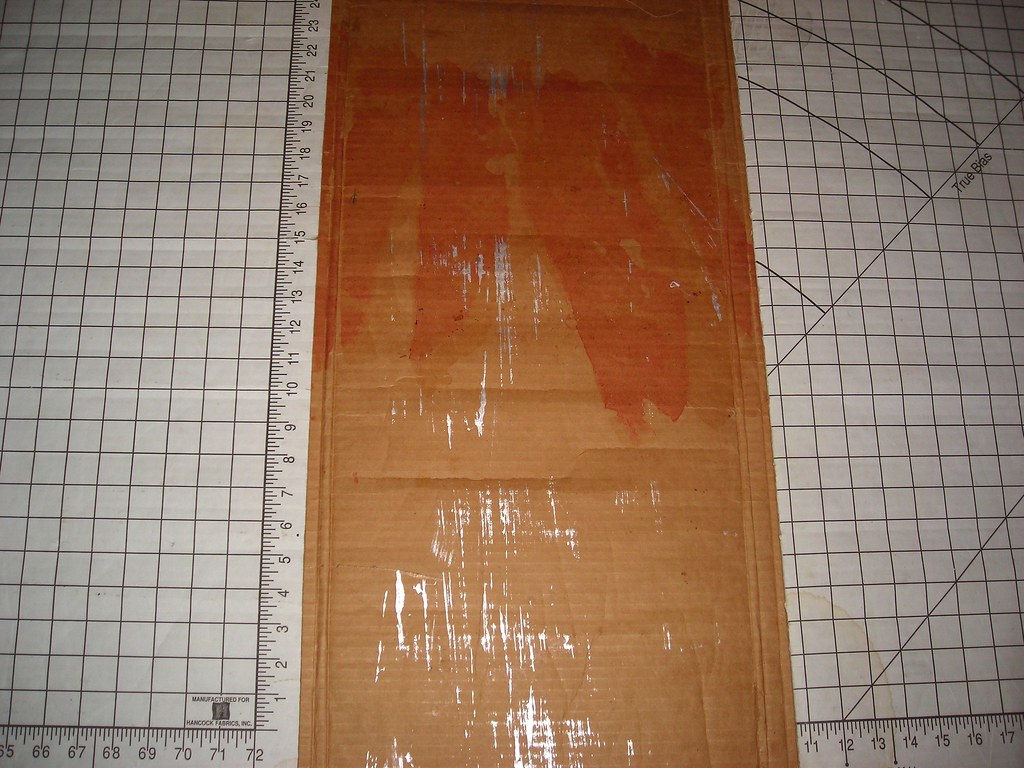
Farewell Old FriendOn Saturday I also went to Joann, coupons in hand, and finally replaced my cutting board. I bought this board way back when I got my first sewing machine of my own, which makes it approximately 12 years old! The backside has silver paint from making the wings for my Ever After costume (of which I don't appear to have any digital pictures but it was awesome) and red dye from making my flame costume. There is a bad mushy spot from when my ceiling leaked and the fold creases are beginning to split and it's hard to cut over them. So it was time to replace it.

For a milli-second I thought about making a grain board like Birgitte's fabulous board, but then I thought, "Are you kidding me?" I don't want to lose my cred as the Slapdash Sewist, aside from which I live in a third floor walkup and the idea of wrangling a giant sheet of plywood up the stairs by myself (let us not forget that I am single and live alone) was enough to put me off, setting aside the issues of getting the employees at Home Depot to cut me a perfect rectangle (LOL LOL LOL ROFLMAO) as I don't have a table saw in my third floor walkup condo and then making the thing. To reinforce it, I actually had a dream about a grain board, and in my dream it broke into three pieces after all the work I went through to make it so I took that as the final sign. Inferior foldup cardboard it is.

A fond farewell to the old board, on which I have cut countless hundreds of projects!

=============================

My prize for winning second place in the recycling contest for my sweater hat is a free pattern from Pattern Review. I cannot decide what to get! The only thing I've come up with is Burda 7890, for the top that is from a BWOF magazine that precedes my subscription (Karen and Cabinbaby have made it, among others). But that seems kind of boring to choose for a prize.

Any suggestions on what you all would like to see me make? I always catch Simplicity on sale at Joann, though their Butterick sales are few and far between and I don't catch McCall or Vogue sales too often so I'd be open to a BMV (especially V) but it would be smarter to choose something I can never get on sale. I thought of just getting the Vogue Tracy Reese dress, but honestly for as much as I love Tracy Reese I just don't think it's that special. Nobody has made it yet; I may change my mind when I see it made up.

=============================

I have to decide what to pack for Miami! I leave on Monday. The big issue is shoes; once I decide what color shoes to bring everything else will fall into place.

I am going to try to finish my sewing back story over the weekend and set it up to post while I'm gone, but I'm not making any promises!

Thursday, February 5, 2009

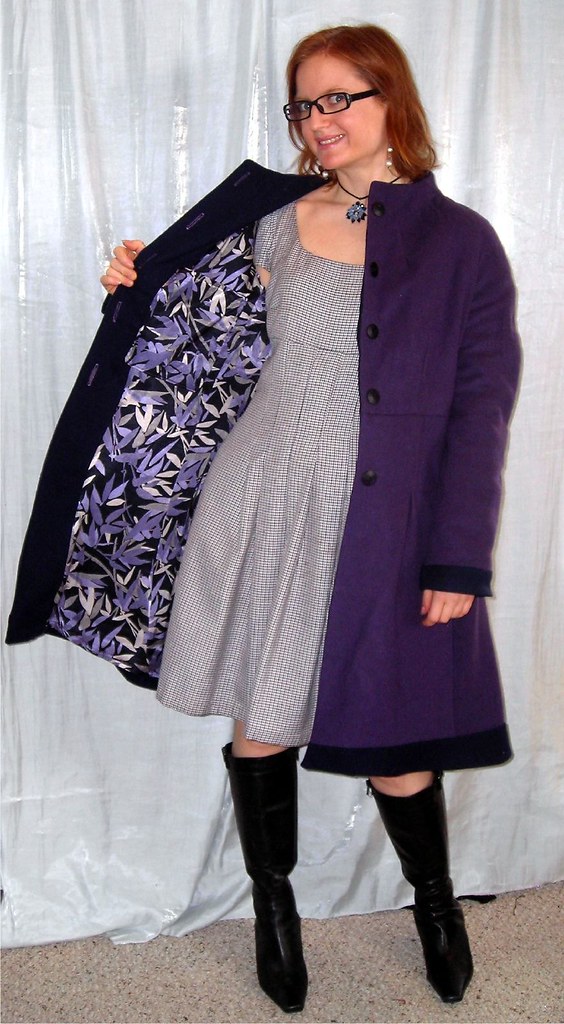
Inauguration Coat: The Final Analysis

Thumbnail

Now that I'm finally here I don't know what more I have to say!

I love my coat. It is warm and cute. I don't normally go around proactively telling people I've made what I'm wearing, but I just can't stop bragging about this coat!

New Techniques:

Extensively fusing the pieces with interfacing was new for me and I like the body it gives to the coat. Given how floppy my fabric is I should have fused the entire sleeve instead of just the top half.

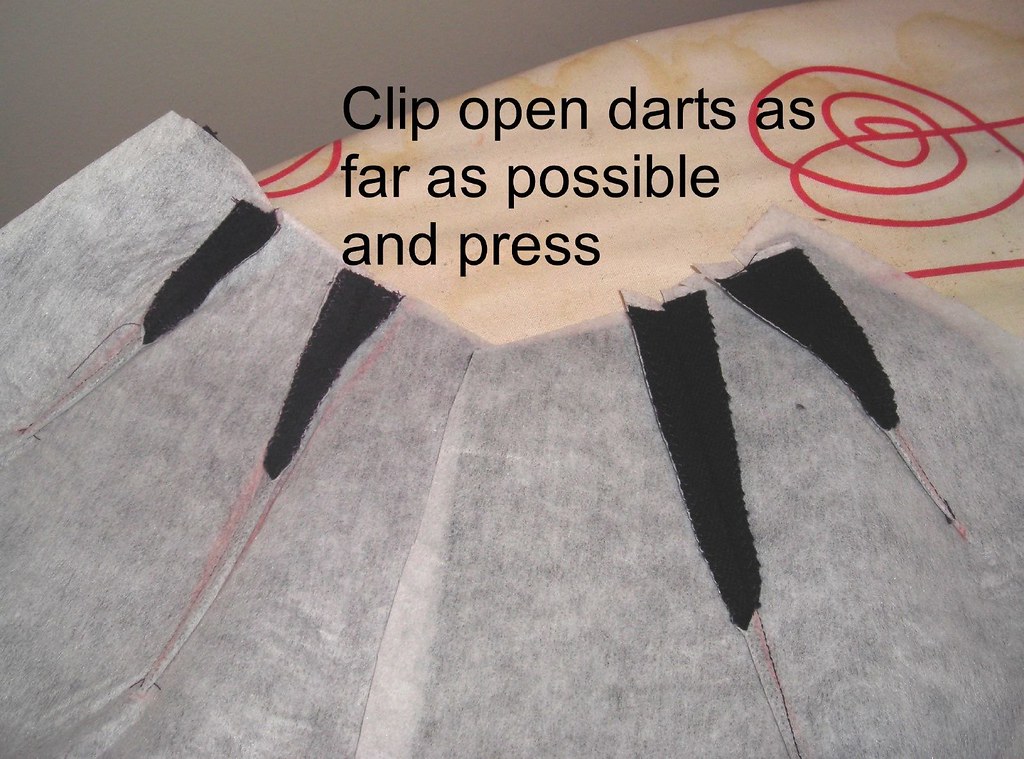
Clip DartsPressing was an issue with this much bulk. I don't have a clapper per se, but I have a rubber mallet so I used that to pound things flat. It really does make a difference. To get nice-looking darts, I cut them open as far as I could (zigzagging the edges to finish), pressed open, and rolled the points toward the center.

Likes:

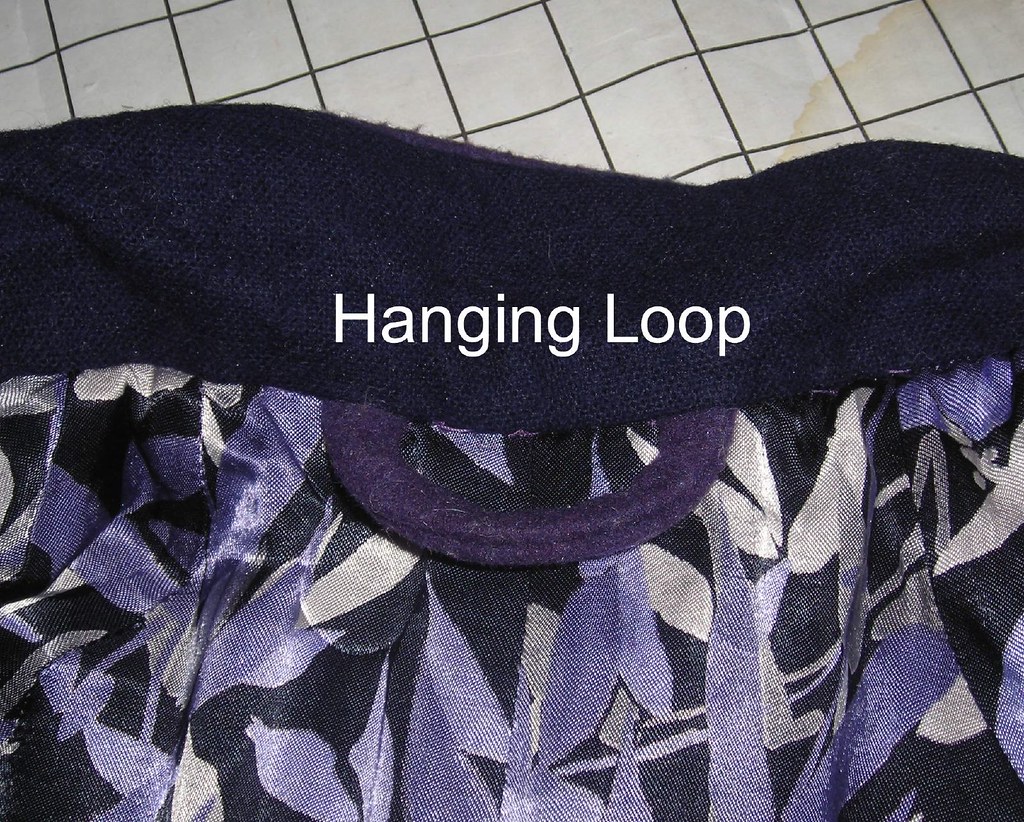
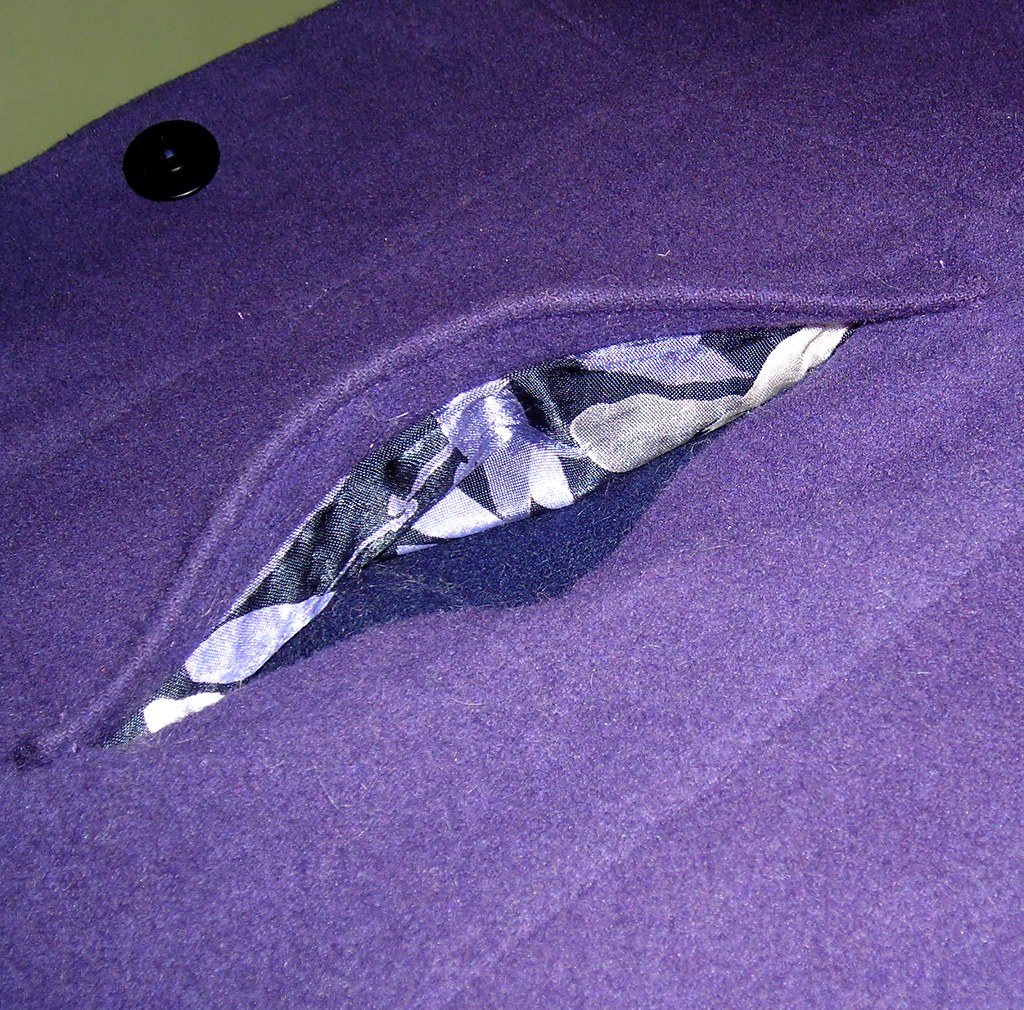
Hanging LoopI am pleased with all my little touches, like the lining pockets and the hanging loop (another thing copied from Melissa!), although frankly I'm afraid the coat is too heavy to be hung by the loop and I don't plan to use it except in case of emergency. But I like the way it looks back there, especially as contrasted with the navy facing.

Contrast navy hem extensions.

Faux welt pockets.

Fleece interlining. Immediately when I put it on the interlining starts trapping my body heat. It is so toasty inside the coat (but not sweaty). The interlining also helps block the wind. And I am inordinately proud of the fleece cuffs.

Dislikes/Mistakes/Slapdash:

Although I love raglan sleeves on coats during the sewing process because there is no painful easing in or sleeve heads or any of that jazz, I'm not sure I love the style when completed. The shoulder area is kind of shapeless. I had trouble with the pattern anyway because the shoulder was about 8 inches out from my real shoulder. So I kept having to take in the upper sleeve seam to get rid of the shoulder nipple problem. I should have fixed that in prep.

Based on the line drawing (the coat is unbuttoned in the editorial photo) I expected this to have more of a wide funnel neck going on. The neck is, in fact, pretty close fitting. Although it disappoints me as a style matter, it's better for warmth.

When I was still wearing it with the shameful basted hem I thought I regretted doing vertical buttonholes instead of horizontal, because I couldn't get the waist seams to stay put and lined up. But moving all the buttons down 1/4 inch fixed that. (I should also say, I never remember in reviews to mention that I pay zero attention to button and buttonhole markings on patterns. I place them according to my body and personal preference.) Someday I'll want to try bound buttonholes, but this was not the project.

The lining pulls the hem on the right side. I don't know why only on that side, and I'm lucky it doesn't pull both sides because I didn't shorten the lining at the waist as I had the fashion fabric so the lower circumference is slightly smaller.

I cut the front interlining on the facing line, figuring that the coat plus facings plus overlap would make four layers of wool, which would be plenty warm and the interlining might make it too bulky. I only feel the lack of interlining when it is very cold (mid 20s or below) and windy, but if I were to do it over I would cut the interlining to the full width at the left front and leave it at the facing line for the right front. That way the interlining wouldn't bulk up the buttonholes, but it would still be there. But as I've only noticed the issue twice in the several weeks I've been wearing the coat, this wasn't a huge error.

I don't think the list of dislikes is bad for how quickly I put this together!


You can see all the photos of the coat here, the pattern review is here, and all the posts here.

Previous posts:
Inauguration day
Sewing timeline
Pockets
Keeping warm
Aesthetics

Wednesday, February 4, 2009

Inauguration Coat: Aesthetics

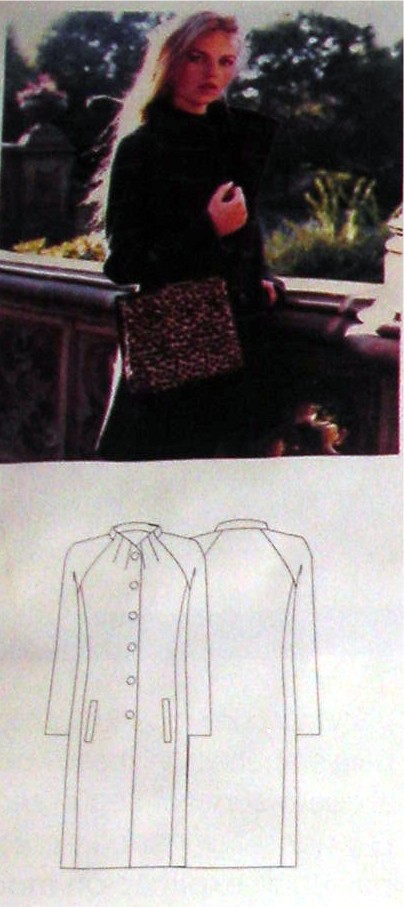
Line Drawing Patrones in general has great editorial photos--they are model-y and artistic but still actually show the clothes. BWOF take note! This coat was an exception, unfortunately. Admittedly, my photo-of-a-photo at left is dark and shows no details, but it is really not much better than the original. They even chose this shot for the cover, which is a puzzling choice as it (1) shows little of the coat, and (2) what they show isn't interesting. There are about 25 other projects that would have made a more striking cover image, in my opinion. So I paid no attention to it in reading through the magazine until I got to the line drawing. Loved the line drawing with that darted funnel neck, princess shape, and slim line.

Altered Back Pattern

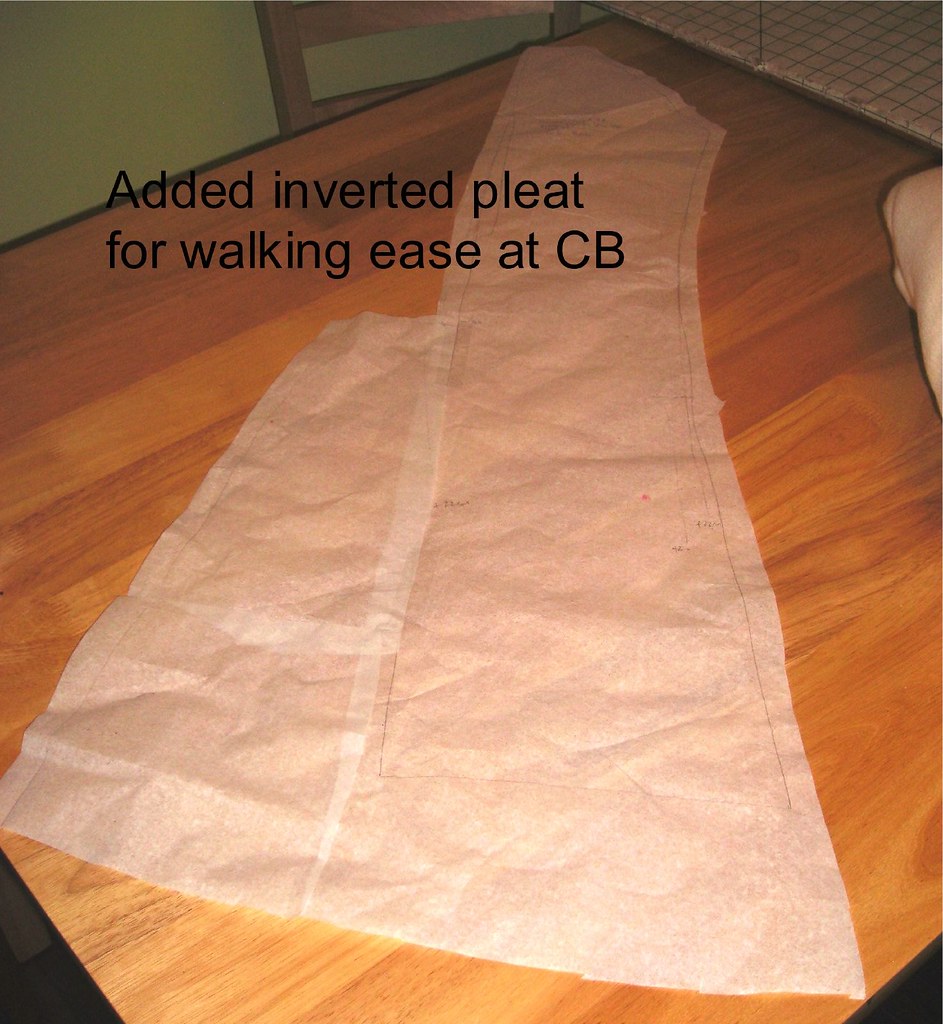
Actually, I wasn't quite sold on the slim line--volume is more my instinct--but I wanted to make a coat to last me many years. DC has a much longer winter than I care for but a limited very cold season (which I define as 30s or below) so I'll only wear it for a month or two each year. While empire lines and volume are all the rage right now, a slim-cut coat never goes out of style. However, I was concerned about walking ease. I didn't want to have a back slit because that would let wind in, so I decided on an inverted pleat at the center back. This meant adding a CB seam and re-drafting the pattern piece a bit, as shown at right.

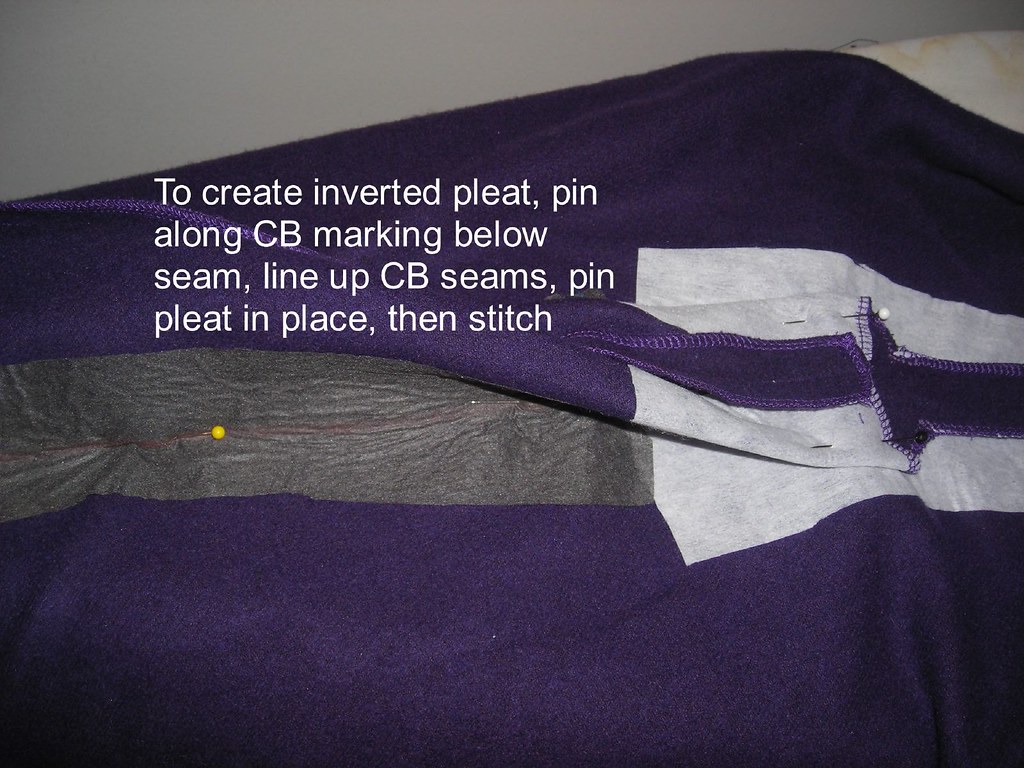
Put in Inverted PleatI wanted a nice looking inverted pleat in the back. I interfaced the pleat itself with heavy interfacing, and then used lighter-weight interfacing all the way down the fold line, as seen here. Then I marked down the fold line; I should have marked the fold line even with the seam line, rather than with the edge of the pleat extension. To sew it up, first sew the CB seam from neck and then down 1 inch past the pleat extension, and then the CB seam of the pleat extension. Pin your marked fold line together and center your CB seams, so that the pleat is flattened.

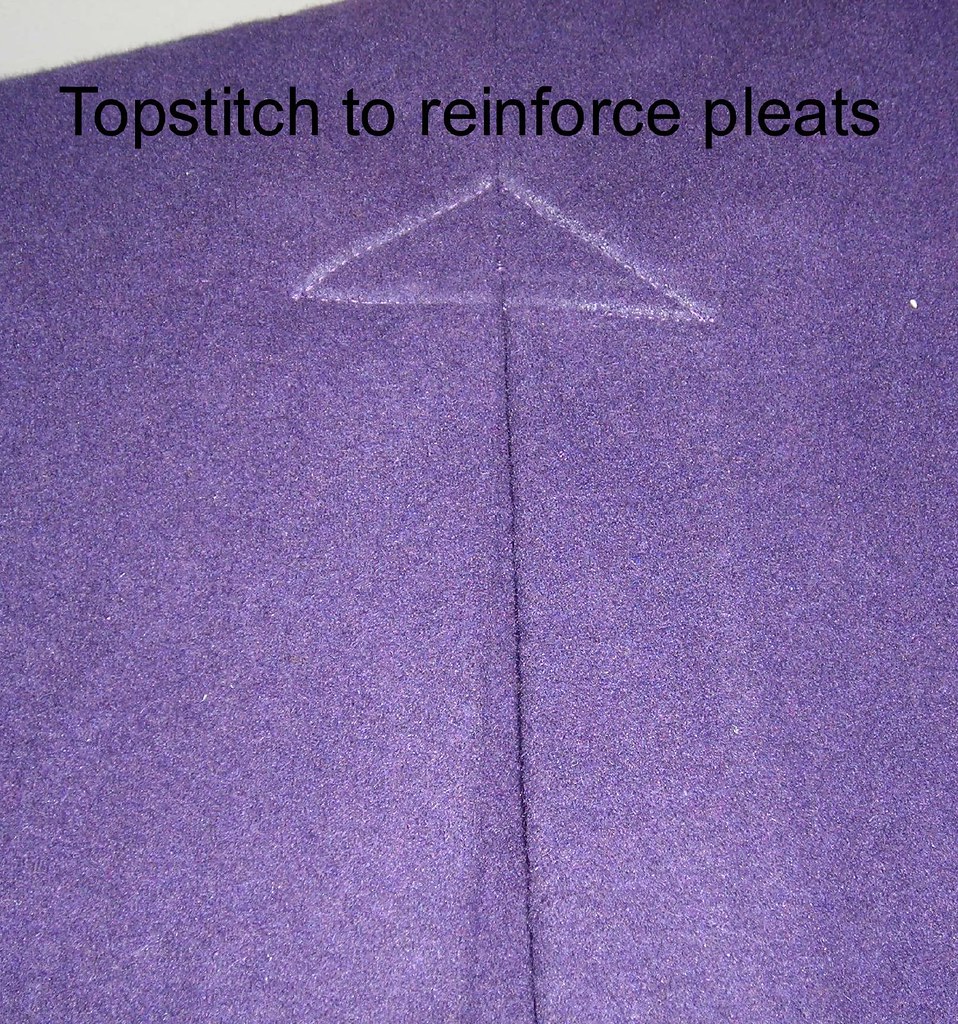
Topstitch PleatsTo keep the pleat in place, topstitch in a triangle shape with the lower edge even with the bottom of the sewn pleat. To get the apex I measured 1 inch up from the bottom and drew chalk lines; I chose the 1 inch randomly, just based on aesthetics, not any kind of scientific reasoning. Then press and press and press that sucker in place. The pleat is holding up very well on the coat as I've been wearing it the past couple weeks. The folds have held their nice sharp edge.

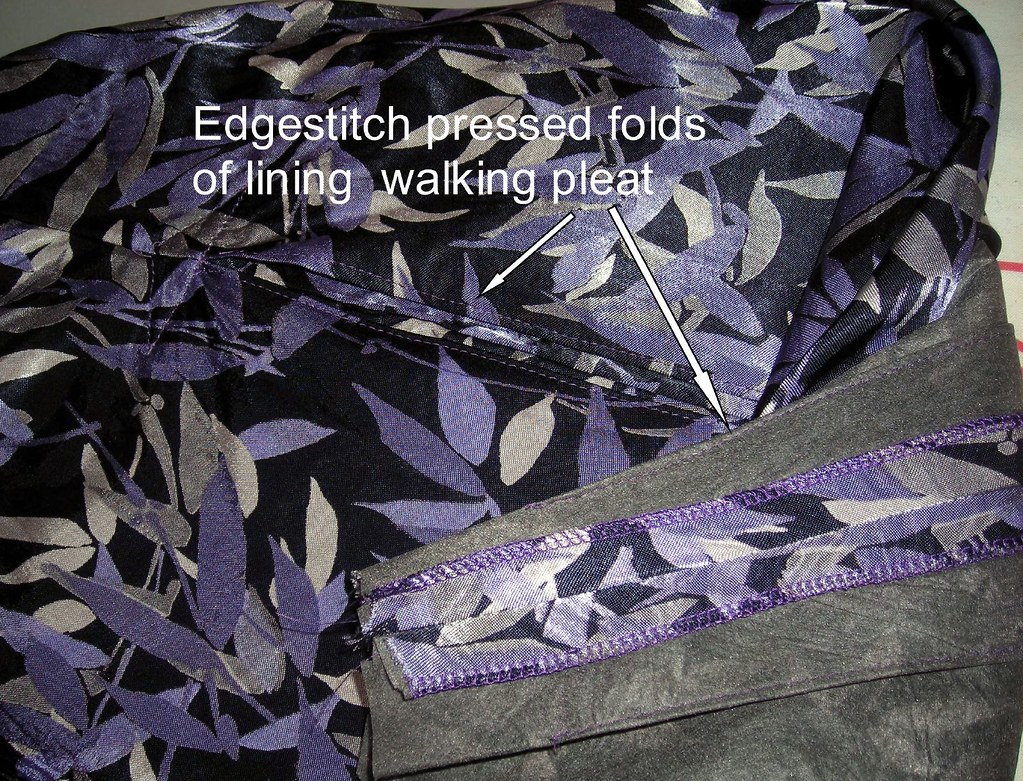
Edgestitch Pleat in LiningI repeated the process for the lining, with the added step of edge-stitching the folds, both the outside and the inside folds. I considered doing this for the body of the coat, but decided that the wool was too heavy and the edge-stitching would look clunky. On the other hand, my rayon lining was so slippery and unstable that it wouldn't hold a press very well even with the interfacing reinforcement.

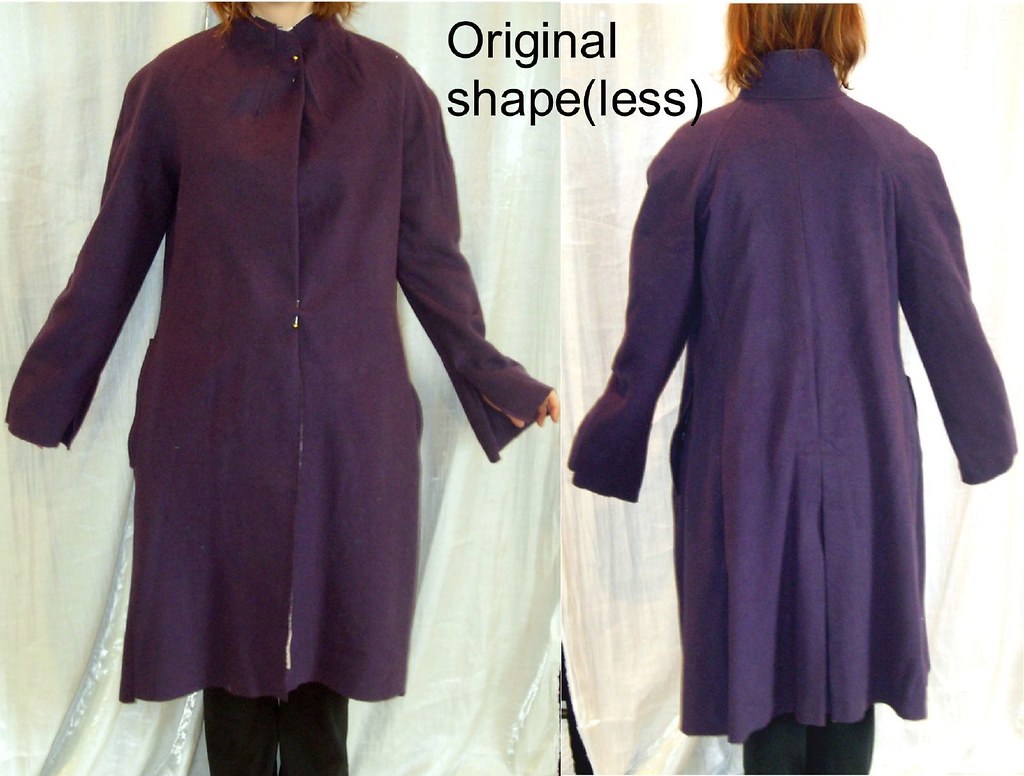
Original Shape So I finished up the outer shell of the coat, and...ick. So incredibly blah. Patrones has limited sizes; this one comes in 40-44-48. I am a 34 on top. I have become pretty proficient in sizing down patterns as BWOF seldom publishes tops in a 34 (36 is usually the smallest size). I sized this coat down to a 36 to allow for plenty of ease for bulky clothing (not that I wear a lot of bulky clothing). So I will take part of the blame for not sizing down all the way to a 34, but really I think Patrones was a little misleading about the shape here. Or should I say the shapeless here. Not only that, but the pockets were too low to comfortably put my hands into and the inverted pleat started too low for my taste. Both of these are entirely my fault; I should have checked Patrones's pocket placement and I basically added the pleat extension in a random place.

Let's recall that I was doing this project in four days and I finished the outer shell on day 3. I really didn't know what to do. The purpose of the coat was to be warm. So can I live with a warm but unflattering coat? No. I really can't. I couldn't fall asleep until I'd figured out what to do. My choices were to take in the seams, which wouldn't help the pocket and pleat placement issues, or to cut it off somewhere between the bust and the waist and raise up the lower half. I decided on the latter.

Adding Shape with Pleats and Darts
I had intentionally not chosen a coat with an empire line so I didn't want to cut too high, but I had to cut it up high enough above the pockets that I could still lose some length, so I measured up one inch from the pockets, marked the line all around, took a deep breath, and chopped. Then I cut three inches off the (now) bodice. Next step was to take in the front and back princess seams, and add darts in the front (as the princess seams are very far to the side). Then I pinned the skirt back onto the bodice and marked the depth and location (back princess seams and front darts) of the new pleats. I fretted about the pleats a bit because my large inverted walking pleat in the back was about three inches down the skirt. I didn't want to add the pleats directly at the waist seam because I thought it would look weird to have pleats in two different places. Luckily, Cidell was visiting me and suggested that I sew the pleats down to the length of the large inverted pleat. A simple and perfect solution! I interfaced the pleats, though not all the way down to the hem as the were too shallow to press that far, sewed down three inches, and topstitched with triangles as I had the large inverted pleat. Stitched the pleats three inches down turned out really well, and fortuitously my pleats ended up being the same length as the darts I'd added on the front and the mirror images look quite nice. A stroke of luck!

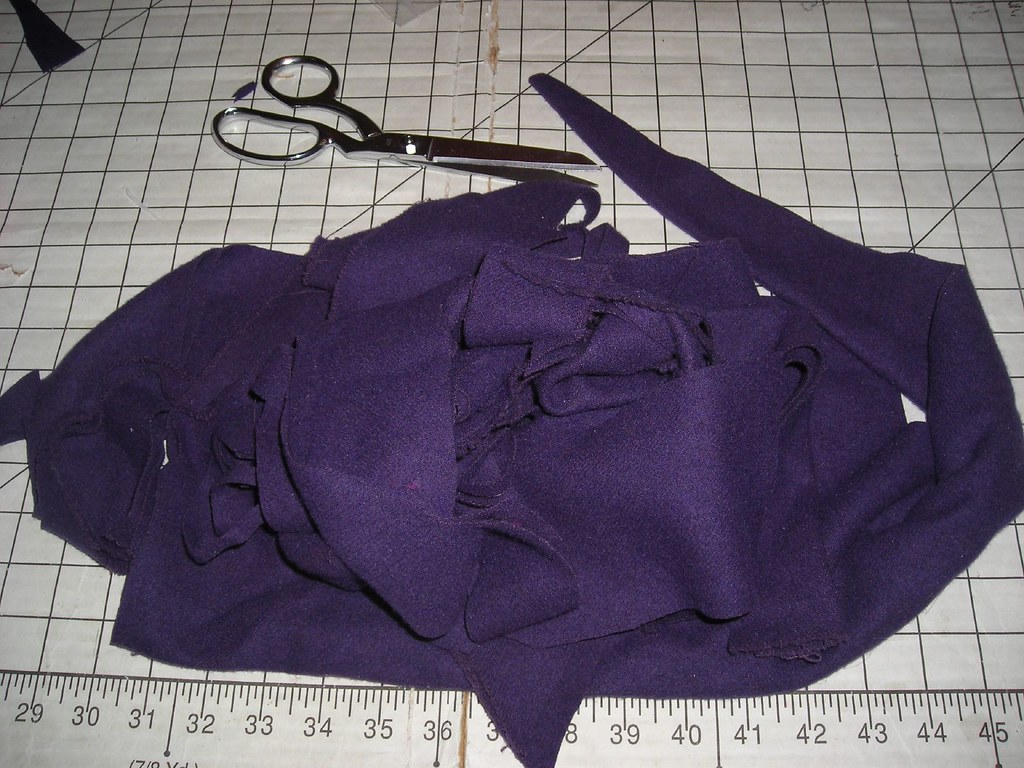
Scraps I got this from the wool remnants table at Jomar in Philly, so I was limited to however much they had, which was a little over two yards. When I went to lay out the pattern, I realized I did not have enough fabric. Argh!!!! I could have looked for another pattern, but I didn't see how I was going to fit any knee-length coat onto what I had and I really had my heart set on the Patrones pattern. I was able to fit all the coat body pieces on, but with absolutely nothing left for the facings, even if they were pieced (you can see my pitiful pile of scraps!).

So I thought about it. Went to my fabric stash. Looked through the amazing cache of wools I received in The Carol Collection. Considered the plaid I later used to make my mom's skirt (sneak peek) but the plaid is a pink-purple and my coat fabric was a blue-purple and they just didn't work. Wished I had some black wool. Decided on navy as my best bet. The combo has totally grown on me and now I think it looks much better than black would have--less expected and more interesting. Carol saves the day!

So I cut my facings out of the navy and tried to figure out how else I could tie it in. When I ended up shortening the coat to deal with its shapelessness, I decided to add the length back in as a hem extension, and to use the contrast as the sleeve extension as well (as I explained in the keeping warm post I wanted extra-long sleeves on this coat). I really love the little touch these contrast hems add. It makes the coat so much more interesting, but because the navy is a sober color it doesn't look garish or costumey.

Not only do the hems add an interesting touch, they also saved my button dilemma. Since I have a large stash of buttons from Fabric Mart I try to find something in stash rather than buy more. I really didn't have anything I liked for this coat; I have some gold buttons that would be great for a coat but I was not feeling gold with the purple. I was a little worried because my four day plan did not include time to go shop for buttons. Once I added the navy touches, I realized I had the perfect navy buttons in stash. Problem solved!

And that's how I made the coat pretty.

I promise I'm almost done prattling endlessly about this coat! Just one more post to come: the final analysis.

Previously:
-Keeping Warm
-Pockets

All photos are here.

Monday, February 2, 2009

Inauguration Coat: Keeping Warm

Although I hoped for this coat to be cute, what it most definitely needed to be was warm. I realized this when I wore my green coat to Philly when I went with Cidell to meet up with Karen, Connie, E, and Elaray in November and FROZE. Now, granted, Philly in November is at least as cold as and possibly colder than it ever gets in DC but OMG. I might as well have been wearing a swimsuit for how warm the coat was keeping me. When planning the green coat I had intended to interline it; even bought the fleece. But I changed my mind because I figured that a wool cashmere blend fulled a bit in the washer and dryer would keep me warm. Ha! Now of course it would have been easier just to add an interlining to the green coat, but why do that when I can make a whole new coat? Especially as I had also realized that the green coat's light color is a weakness in addition to being a great feature; it shows every speck of dirt.

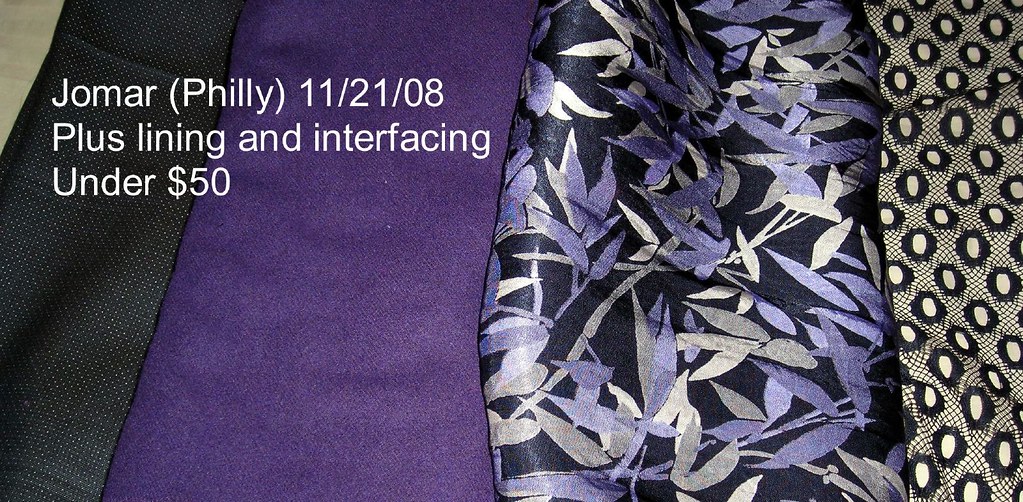
Jomar 11-08On that very trip to Philly during which I froze, I was seduced by the purple wool at Jomar (as Karen recalled!) and found the matching lining. The wool was in the remnants at $4/yd, and the lining was also $4/yd as I recall, which is rich living at Jomar but it was the piece that I loved so it was worth the "high" price. I assumed it was poly, but when I got it home it turned out to be rayon so that was handy. As with the green coating, I washed the purple to full it as much as I could. It turned out to have some kind of HORRIBLE HORRIBLE sizing on it that smelled absolutely dreadful. It took a couple more washings to get it out and the hand changed completely to be very floppy and blanket-like, which was unfortunate but I probably would have gotten cancer had I worn it with whatever that god-awful toxic sizing was still in it so oh well.

My corduroy jacket is way warmer than it has any right to be, and I can only assume that it's due to the fleece lining, which is looking pretty pilled and ratty but I love the coat so much I can't give it up. So I knew I'd have to use that fleece I bought for the green coat to interline this one. This is just regular Joann fleece; not any kind of special microfleece or lining fleece or flannel-backed fleece or whatever. Yes, it's bulky, but this is a winter coat we're talking about here. I'm ok with bulky in a winter coat.

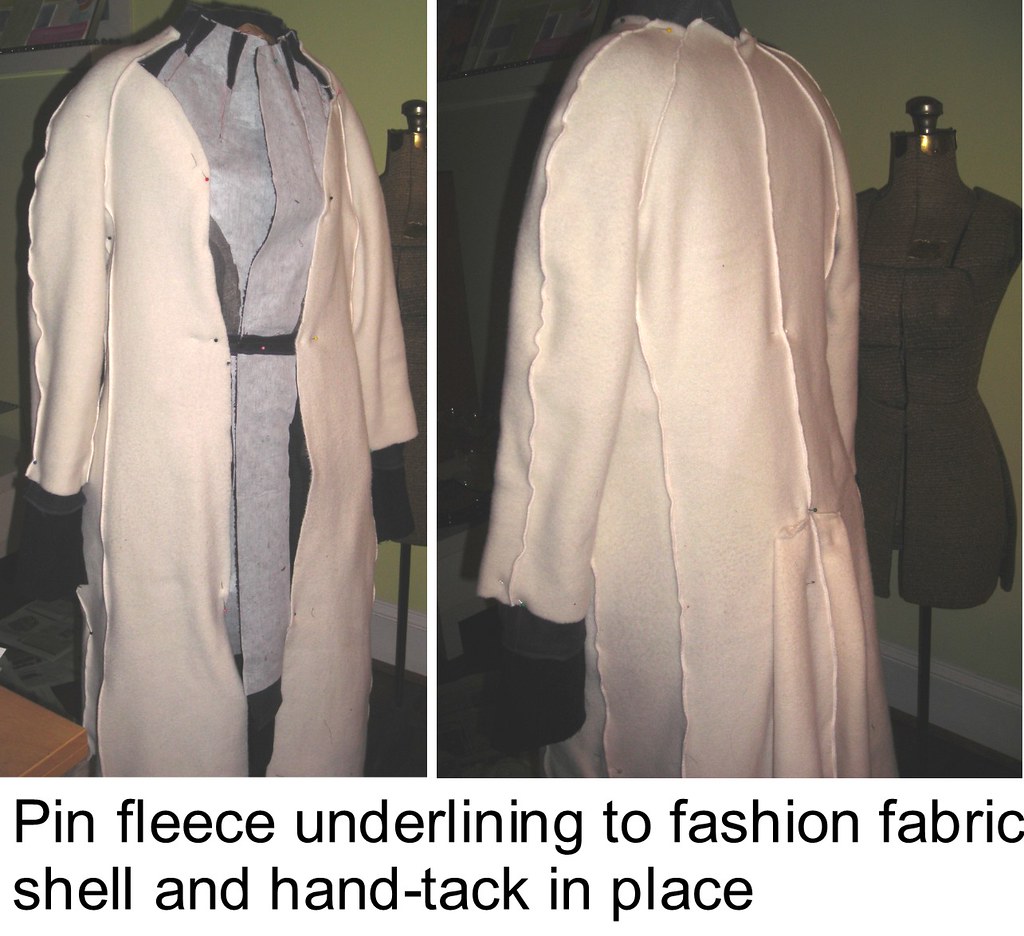
Fleece UnderliningThe first thing I did on this coat was to cut out and construct the fleece interlining. Again I piggybacked on Melissa's coat-making experience. One of the things she did was trim off all the seam allowances on her interlining pieces and hand-sew them to the seam allowances of the coat to reduce bulk. Now, that is too extreme for me, but I took away the lesson about reducing bulk and constructed it on the serger. Which is also just fun. And then the serger scraps made excellent stuffing for the top half of the paper tape double I'm working on. It was a total win-win situation. I was wearing it around after it was done and it was so warm! I knew I'd made the right call.

Hand Tack Underlining

After the outer shell of the coat was constructed, I hung it inside out on my dress form and hand-tacked the interlining at key points: neck, shoulder, in the back above the inverted pleat, underarm, at the top and bottom seams at the end of the sleeve, and a couple points along the front. I had fused the front along the facing line with a heavy interfacing and tacked the interlining only to the interfacing. I am hoping that it won't eventually pull the interfacing off, but I have left the lining hem free of the coat hem so I can always go up into the guts of the coat and fix things.

I already talked about my fleece pocket lining on the pocket post. The pockets are so warm for putting my hands in!

Another thing I had learned from my corduroy jacket and green coat is that I wanted the sleeves to be long, at least down to my knuckles. On both of the previous projects the sleeves end right at my wrist, and this is just not long enough for a coat! I was particularly frustrated with myself at the green coat because I had already made the cordouroy jacket and knew I wanted longer sleeves, and yet somehow even though I cut them super long on the green coat they still ended up short. Argh! This was my do-over. I cut the sleeves as long as I could, but because I had bought the fabric as a remnant I didn't have quite enough of it. I arranged my cutting layout so that I would have two pieces left over large enough to add sleeve extensions.

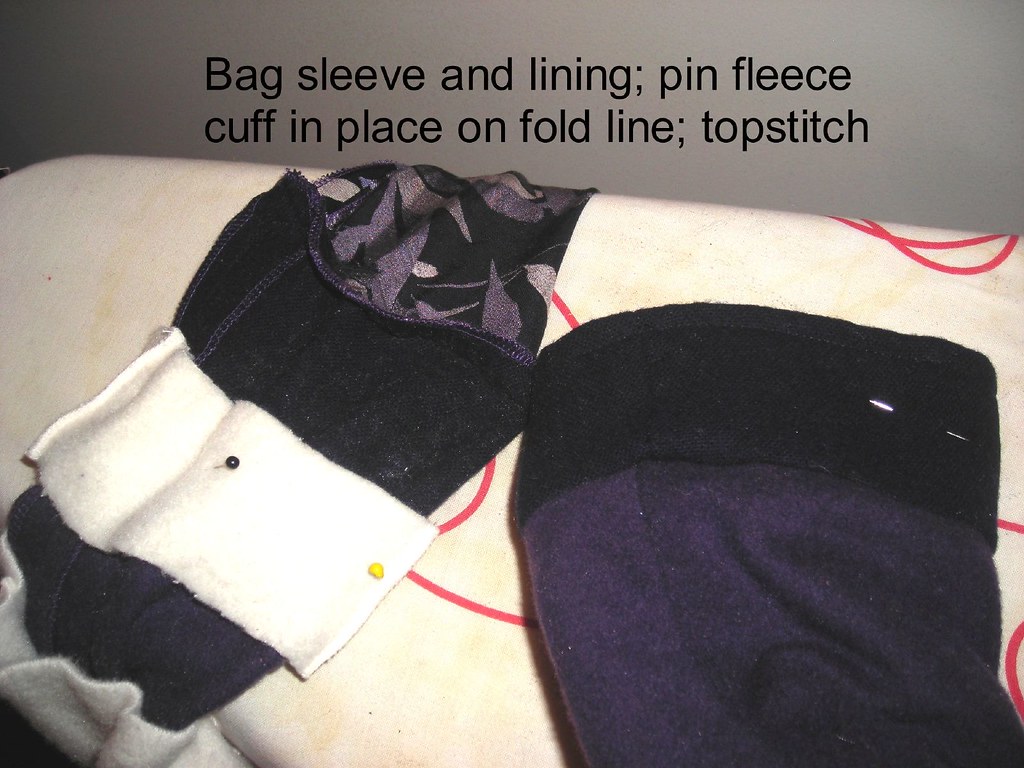
Fleece CuffsThen I hit upon doing the sleeve extensions in the contrast fabric I used for the facings. Nice. OK, so the sleeves were going to be long enough, but how to make them warm enough? Fleece cuffs! Now this was a delicate operation. I had cut the sleeves of the interlining off a little above the cuff line and then made little fleece cuffs. I *should* have slipped them on before bagging the sleeve linings but of course I didn't, so I had to unpick the stitching, slip the cuffs on and then rebag. Next step was to mark the hem crease in the sleeves. That done I pulled the bagged sleeves back out, pushed the fleece cuffs down to meet the marked crease, pinned in place, pushed the bagged sleeves back out, and topstitched the cuffs in place.

Of course, I later realized I hadn't got either sleeve's hem right and the sleeves were hanging all awkwardly. So I had to unpick my topstitching and do the whole thing over again. Grumble grumble. The pics were taken first time around so you can't see that when I went back in I interfaced along the cuff fold line, which gave me a much crisper edge. This time I put in four rows of topstitching and they are really cute *and* add some structure so the sleeve hems aren't all floppy. All this annoying work with the bagging and the unbagging and the pulling the bagged sleeves in and out and in and out (I felt like it was Thanksgiving and I was spending hours and hours with my hands up a turkey's bum, even though I'm a vegetarian and have never done this) was totally, totally worth it. I am so glad I finally got the sleeve length right and the fleece cuffs keep the cold air from rushing in past my gloves.

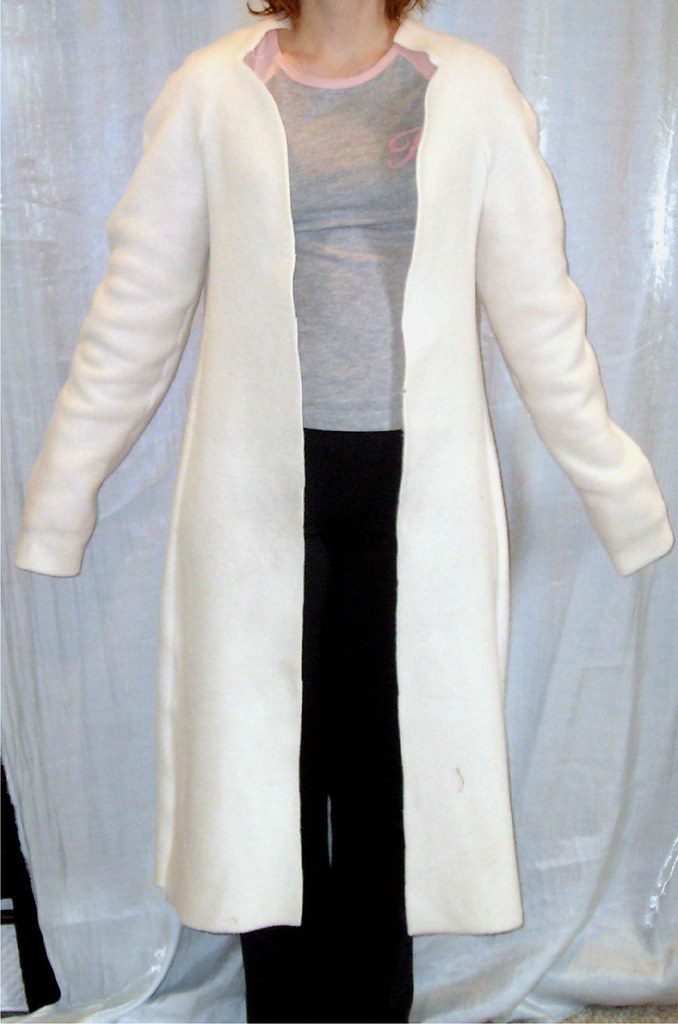
You can see the length of the sleeves in this picture:

Lining

All photos are here.

Already discussed:
pockets

Still to come:
Aesthetics
Overall Review

Thursday, January 29, 2009

Inauguration Coat: Pockets

Although I was doing this coat on a very tight schedule, I wanted to make sure I was putting in all the features I wanted and that I was doing them well. "On time, no defects: pick one" was not in my vocabulary for this project, unlike my general attitude!

Patrones has drafted the pattern with a single welt pocket on the center front piece of this princess seam coat, with the pocket placed about one inch from the seamline of center front and side front. Although I finally learned a double welt pocket last year for my green coat I have not yet tried the single welt. Admittedly, this had a bit to do with my reluctance, but honestly I really didn't see the point in creating a weak spot in your fabric by putting in a welt pocket a mere inch from a seam. It seemed much more logical (as well as easier) to put it in at the seam. However, since I wanted this to be nice I decided to put it in as a faux single welt pocket.

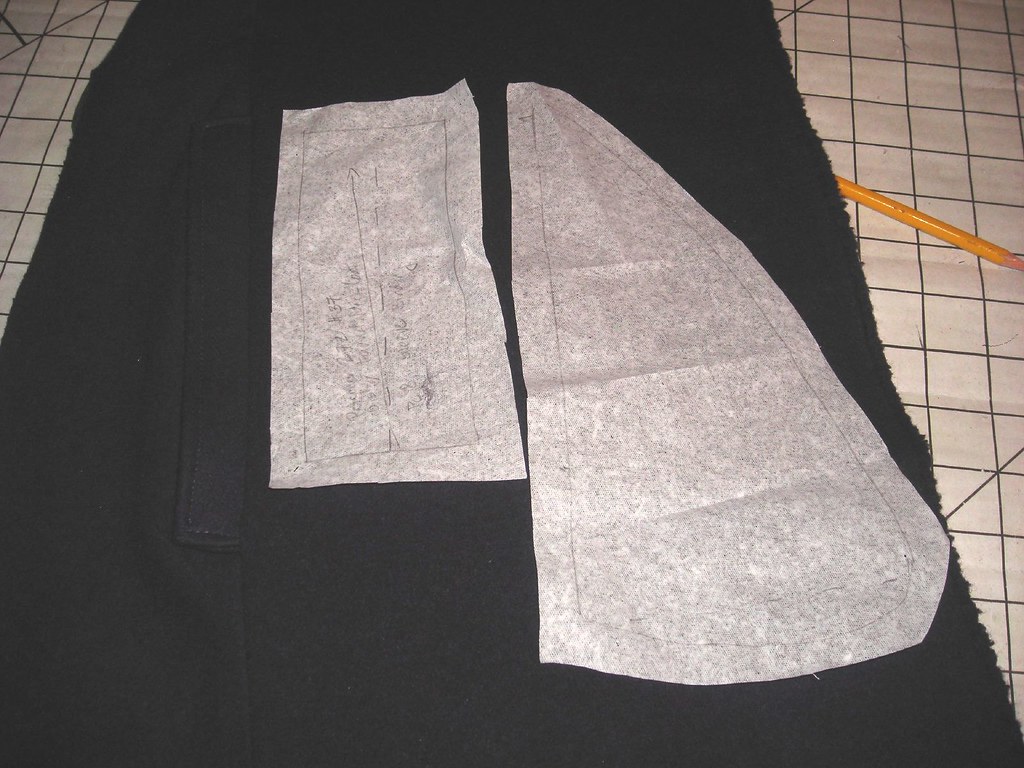
Original Pattern Pieces for Pocket and WeltFirst step was to deal with the pattern. Patrones is generally well drafted, but I don't know what was up with the drafting for the pocket and welt. I'm sorry the image at left is so dark (click to enlarge) but on the far left is the finished welt. It is about 2 1/2 inches longer than the drafted welt (center). The length of the drafted welt was problem #1. I have small hands, but even I would have had a hard time getting my hand into a pocket that narrow, much less while wearing gloves. Then there was the issue of the pocket opening length versus the welt length. I just don't get how they were supposed to match up! I also found the pocket a bit too small for my taste. I want to be able to put my hands all the way into the pockets to keep warm, and keep gloves and kleenex and emergency chocolate in them too.

Altered Pocket Pattern


So I re-drafted the pocket to be wider and longer, with an opening that actually matched my longer re-drafted welt. After recutting the welt and the pocket back and the pocket front yet again I was finally ready to start putting this thing together!


I had to meditate upon the construction a little bit to think about how to layer the welt and the pocket pieces and which direction all the seams would be pressed to minimize bulk. The biggest bulk issue was the (faux) welt itself, but I realized if I sewed it to the center front piece, when it was folded over the side front piece and topstitched in place the seam allowance would automatically face toward center front where it was supposed to. I wouldn't have to try to iron it into a different direction than the business end of the welt.

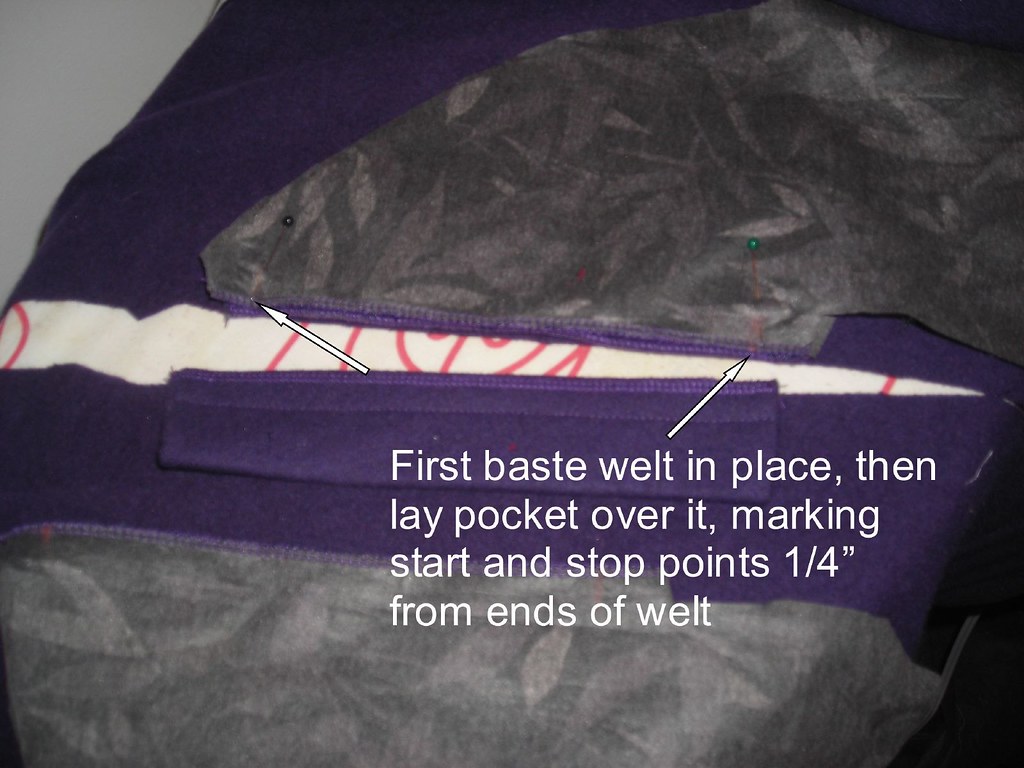
Faux Single Welt PocketsOK, here goes nothing! The first thing I did was carefully, carefully mark the position of the welts on the center front pieces so the pockets would end up parallel to one another. Then I basted the welts in place. Next step was to pin the lining half of the pocket over this, marking the start/stop points of the seamline 1/4 inch from the ends of the welts. As you can see, I had interfaced the lining bits of my pocket. My lining fabric was a slippery, unstable rayon and since the pockets are going to get a lot of wear I wanted to reinforce them.

Reinforce Pocket Opening Next step was to sew the fashion fabric halves of the pockets to the side fronts, after, again, very carefully marking their placement. Because of my limited fabric I used my contrast navy wool instead of the purple wool. When I made my Butterick 4665 corduroy jacket I reinforced the seam along the pocket line with selvage strips to keep it from bagging out. That coat is still going strong and the pockets look great, though I almost always walk with my hands in them. While I figured that the welt would protect the front piece, to keep the side front from stretching along the pocket seam I stitched twill tape along the pocket.

After all this, all that was left was to sew the front seam, stopping at that marking 1/4 inch in on the welts, and then sewing the pocket bags together. I topstitched the welts upper and lower edges of the welts onto the side fronts to keep them in place.

Well, almost all that was left. I did not participate in the Great Coat Sew Along (blog now open to the public!) because it's just not in my personality to spread a project over months. Four days for a coat is extreme even for me, but a few weeks is more apt. Although I have tremendous admirations for sewists who do perfect, exquisite, ornate tailoring work, it just ain't me. However, I was able to piggyback a bit on all the knowledge shared in the blog (before it was public) through Melissa Fehr's blogging about her warm winter coat.

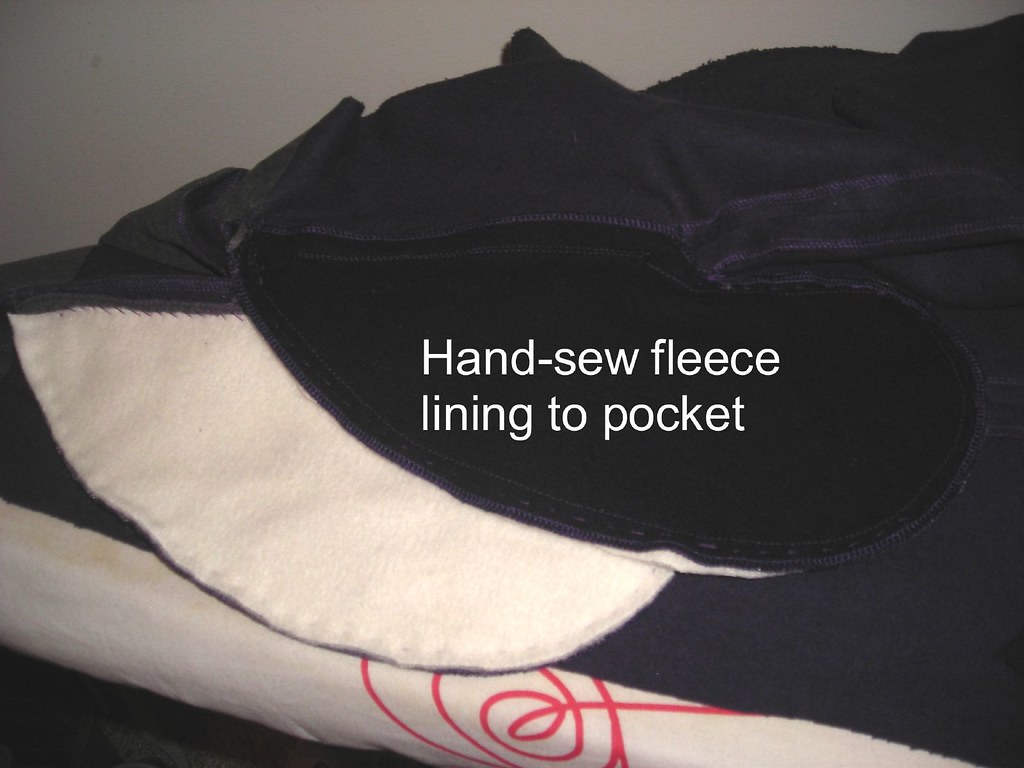
Fleece Pocket Lining One of the things she mentioned was pulling the pocket bags to the inside of her interlining. Making sure pockets are interlined sounded brilliant to me. I definitely planned to interline my coat (more on that later) but to be absolutely sure my pockets would be as warm as possible, the last step was to hand sew a fleece interlining to the lining side of the pocket (this is the side that faces outward).

Finished Pocket Having worn the coat now for a week I am thrilled with these pockets. They look cute, they are capacious (I was carrying a mini-pack of kleenex in one earlier in the week when I had a cold) but not cavernous (I can reach the bottom), they are sturdy, and they are warm. You really can't ask for more! Once I decided to add the contrast bits to the coat so the facing would make sense I had a little moment of wondering whether I should have made the welts in navy, but I think purple was definitely the better choice. Navy welts would have been too cutesy.

Lining PocketsBut of course pockets for your hands are not enough in a coat! I wanted to put pockets in the lining. My standard for the size and capacity was that if I wear this coat on a trip somewhere I want to be able to keep my passport, extra credit card, camera, and miscellaneous other small items in them. I did two pockets. On the left side is a zippered welt pocket, and on the right a patch pocket (made of two interfaced layers of lining). Now that I know how to make a welt pocket, a zippered welt is a cinch, and I think it looks great. Melissa and I were again in sync on this because I put my bright green zipper in before she showed off the colored zippers in her faux fur jacket.

Here I am, demonstrating the in-seam pockets:

Front

Still to come
-Keeping Warm
-Aesthetics
-Overall Review

You can check out all the photos of this project, Patrones 272-37, here.

Monday, January 26, 2009

Inauguration Coat

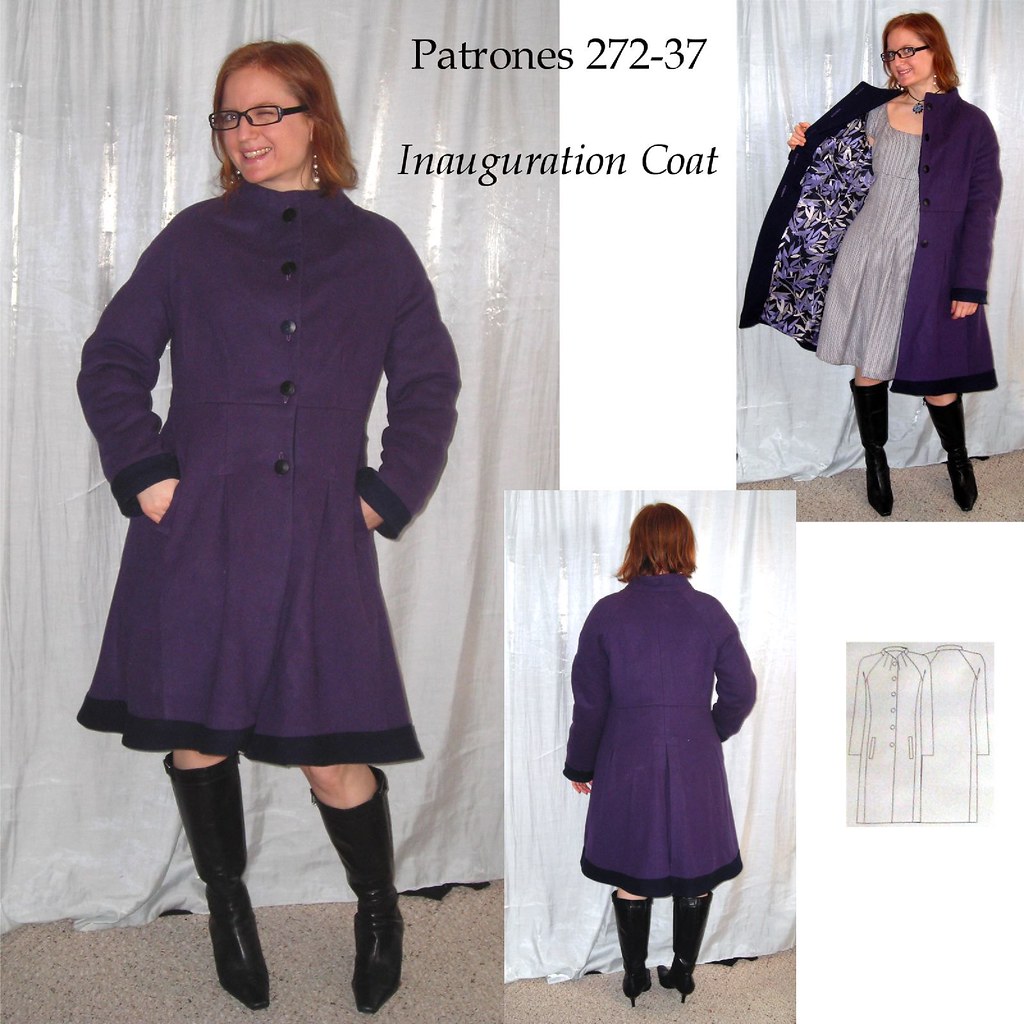
I didn't really have a coat warm enough to wear to the Inauguration. Because of my flex day, the weekend, MLK Day, and Inauguration I had a five day weekend. Plenty of time to make a new warm coat!(<--sarcasm) I made this mostly over the course of four days and wore it on the fifth day (though it was not, strictly speaking, finished). Kids, don't try this at home.

Week before. Trace out pattern (including sizing down). Cut out. Modify back to allow for inverted pleat walking ease.

Day 1. Cut out and construct fleece interlining. Cut out fashion fabric and lining. Fuse front and front facing. Put darts into neckline of fashion fabric and facing. Make skirt for party.*

Day 2. Put inverted walking ease pleat into center back of fashion fabric and lining. Construct in-seam pockets with faux single welt (includes sewing front/side front seam). Fuse upper front (front and side front pieces), upper back (back and side back pieces), and upper sleeves (front and back sleeve pieces).

Day 3. Construct outer shell. Realize shape is bad and pockets are too low; conceive strategy to modify as can't fall asleep with an ugly coat looming. Groaningly acknowledge it will add two hours to construction. Rip waistband out of party skirt when realize should have put plaid going other direction.* Cut out new waistband.*

Day 4. Cut apart along waist seam. Cut 2.5 inches of length from skirt at waist. Take in side front and side back seams on now-bodice and add darts in front. Pin skirt to bodice and mark inverted pleats in skirt along side back seams and even with front darts. Put in inverted pleats; sew skirt and bodice together. Construct lining and facing. Put one zippered and one patch pocket into lining. Realize you want a hanging loop at CB neck between lining and facing. Unstitch. Put in hanging loop. Hand tack fleece interlining to constructed outer shell. Sew lining to fashion fabric along center front and collar. Turn and press. Pound with mallet. Hand-stitch a few inches in ditch between collar and collar facing. Make mental note to hand-sew entire ditch at later date. Mark buttonholes, put in, and sew on buttons. Add contrast sleeve extension. Bag sleeves. Topstitch sleeve edges to hold cuff fleece interlining in place. Add contrast hem extension. Lose steam. Baste hem. Badly.

Day 5. Wear coat with shameful basted hem. Be warm (except for toes) at Obama Inauguration. Come home happy and exhausted.

Days 6-8. Wear coat with shameful basted hem. Twice. Feel relieved when weather warms up on 3rd day and can wear other jacket. Unpick sleeve hem topstitching after realizing sleeves aren't hanging right. Interface folded sleeve line. Reposition fleece cuff interlining and topstitch four rows. Really hope I got it right this time. Change serger thread to navy in preparation for remedying shameful basted hem. Move all buttons down 1/4 inch so sides line up exactly. Realize basted hem was actually spot on. Press. Remove basting. Serge raw edges. Put in machine blind hem. Replace waistband in party skirt.* Done!

*This step optional.

There are a whoooooole lotta details coming in the next several days--you can sneak peek here (though I realize there's still a few more things I want to show). But for now, the finished product. It is delightfully warm.

Thumbnail

Sunday, June 29, 2008

Mailbox Squee

My debit card got demagnetized when I was in France or shortly thereafter so I have no access to cash for over a month. I called 2 1/2 weeks ago to get a replacement and it still hasn't come. Every day I run to the mailbox hoping today is the day, but so far no luck (so I'm going to have to call again and they're going to cancel the old card and make me get a new one and they assign you a PIN that you just have to memorize so I'll have to learn a whole new PIN and I'll have another two week wait).

Anyway, when I checked the mail Friday I didn't have a new debit card but I did have a mysterious package. I thought I might recognize the return address so I didn't fear anthrax and very curiously opened it up.

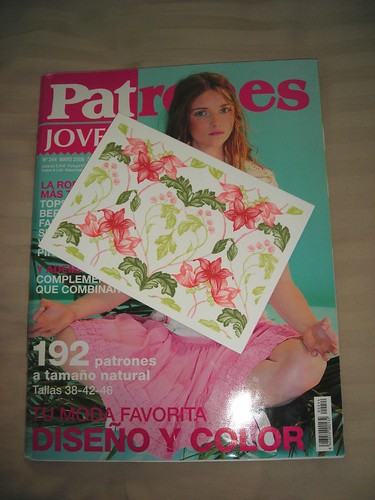
What to my wondering eyes did appear but...a Patrones! And a lovely card from Lisette of La Cubanita Cose.

Patrones Joven 05/2006

She said the Joven edition was a little too joven for her, and hoped I would enjoy it. Claro que si! I love Patrones, as you know, and only have a few of them. This one definitely has a young vibe, with lots of fun little patterns for a hot summer day at the beach. Now I need to plan a beach vacation....

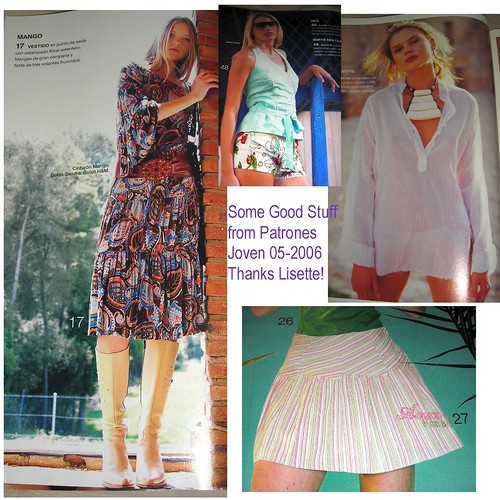
Here are a few of my favorites:

Some of the Great Patterns

I love the sleeves on the dress, the concept of a wrap halter, the classic tunic (I don't have a pattern for one, believe it or not), and playing with stripes on the skirt.

A big thank you to Lisette for the wonderful and unexpected gift! Now I have new bedtime reading.

Monday, January 7, 2008

Patrones 252, #9 Sportmax Blouse


When Cidell loaned me her Patroneses (which always makes me think of a Patronus from Harry Potter), the first--and perhaps only, now I think about it--project she pointed out she was in love with was this blouse. I smiled and nodded and thought, OK, that's kind of weird.

But then the more I looked at it, the more I liked it. Something about the drama of the sleeves was calling to me, and I traced it out.

I bought the pinstripe fabric from Kashi when I was in NYC for the Mermaid Parade in June (here's the other fabric I got on that trip--this is the third project from that haul, which isn't *too* bad). I didn't really have a specific project in mind, just knew I wanted shirtings because I never have any when I want them. In fact, though I have yards and yards and dozens and possibly hundreds of yards, I never have what I want when I want it. But my fabric buying habits are a story for another time. Anyway, I got the fabric home and decided it would be perfect for this pattern. So I let it age. For months. And then finally picked it up.

It worked up pretty quickly and easily, as quickly as a blouse does at any rate. Blouses are a huge timesuck for me. I don't know what it is. The collar? The placket? The buttonholes and buttons? It always takes double the amount of time to sew that I estimate, hours and hours more than it seems like it should. I don't know why that is, nor why I keep making them! This is the third one in the past few weeks.

I like to find the designer reference Patrones uses for its designs so I looked at Sportmax's Spring 2007 RTW show (in case you did not know, as I did not, Sportmax is Max Mara's bridge line, or RTW line, or something--I should really learn the definition of all the types of lines). Oddly, there doesn't seem to be one. For all the other Patrones projects I've done, it's been a direct copy of a runway look.I looked at the other shows and it didn't come from an earlier season. I found a blouse with a drop shoulder and full sleeves, but they aren't gathered at the hem, at left. And then there was a dress with full sleeves gathered at the bottom, but the shoulder was at true shoulder and they're longer than the sleeves on Patrones's blouse, right. A mystery.

What's slapdash about this project? Probably the buttonholes. I'll admit it, I kind of just didn't want to have to wind a new bobbin of the light blue, and I wanted to use up the dark blue. I genuinely did intend to have the color blending and the bright blue buttonholes on the reverse, but it was kind of born out of laziness.

So Patrones's instructions are not models of clarity. There's the minor problem that they're in Spanish, but my Spanish is OK and having worked with so many of them by now I know a lot of sewing vocabulary (though I can't pretend there aren't still words that mystify me and elude translation). Perhaps the kinder descriptions would be "zen and spare" rather than "short and useless." Below is a direct translation (or as direct as I can get). As you can see, it leaves a lot to the imagination:

Patrones 252 #9
Sportmax Blouse

Number of pattern pieces: 5 (from 15-19)

Fabric: 2 m of 1.4 wide fabric in striped cotton

Cut:
17 Blouse front (cut two)
16 Blouse back (cut on fold)
15 and 15A Sleeve (cut two)
18 Cuff (cut two)
19 Collar (cut two on fold)

Construction:
Sew front and back darts.

Sew shoulder seams.

Pass a double gather in the sleeve cap and sew into the armholes.

Sew sleeve and side in one continuous seam.

Pass a double gather at the ends of the sleeves.

Apply fusible interfacing in the middle of the cuffs on the wrong side, iron, fold right against right, sew the short end, turn, and sew to the end of the sleeves, tightening the gathers and forming a pleat at the middle of the cuffs. Turn cuffs.

Fold the front placket and secure with a backstitch.

Apply interfacing to the wrong side of one collar, iron, and unite the two collars right against right. Sew the upper edge to mark A. Trim the seam allowance a little, turn and sew one layer to the neckline to mark A. Turn the layer opposite. [It’s not noted but assume here you hand stitch the other layer in place on the inside.]

Make hems, sew buttonholes, sew buttons.

Thursday, July 5, 2007

Patrones 253, #40 Philosophy Shirtdress


Another pattern from Patrones. I am addicted to this magazine's patterns! Thanks a lot, Cidell. The official pattern review is here and the web album is here.
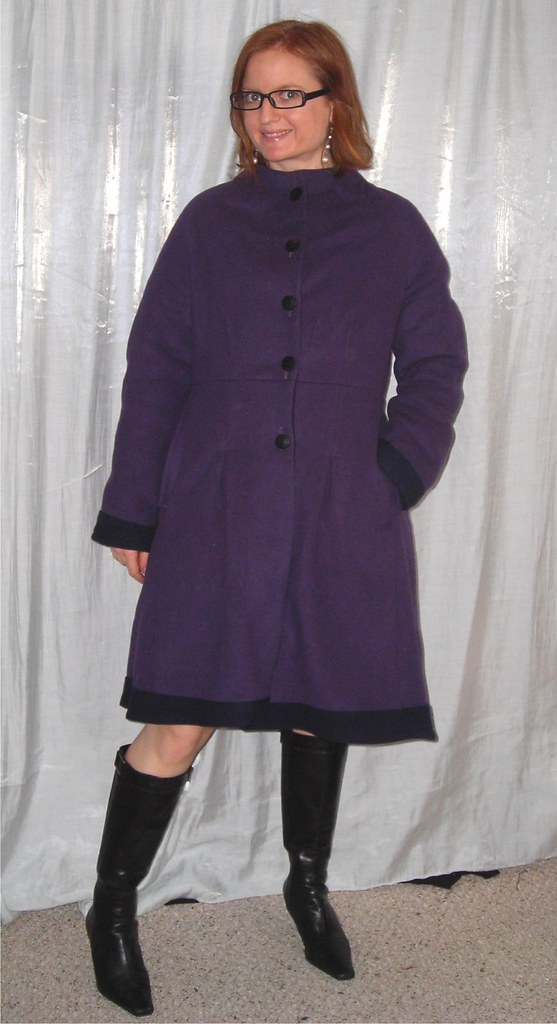
I said it in the review and I'll say it again here: I was verrrrry doubtful about this dress as it was on the sewing machine. Usually I love the process of trying on a garment as it slowly goes from flat fabric, to cut out pieces, and on through the process of assembly. It's so fun to see it take shape and become real clothes. With this one, at every step I was afraid I should just cut my losses and abandon it. It did not look good until the only things left to do were buttonholes and hems. Then I started really liking it, and now I love it.

I never wear anything with a fully buttoned neck, partly because I think my collarbones are one of my good features and partly because I love to make and wear jewelry so I always wear a necklace (this dress gave me an excuse to fire up the torch and make the earrings to go with it). I think with the buttoned up placket, rounded collar, and wide belt the style is a little Gothic Lolita (here are some photos from flickr for examples), which is not normally my style and plus my age makes it kind of laughable, but I am drawn to all things costume-ish so I guess it's not that surprising that eventually I'd end up with something Gothic Lolita in my wardrobe. I will not be carrying a teddy bear while wearing it, but I cannot guarantee I won't carry a parasol. I got one last summer that I carried a few times, and was told I was fabulous while walking around in Logan Circle (a gay area of town). That's my stamp of approval. Actually, I think I get catcalled more by gay men than by straight men. Perhaps this is another piece to the puzzle of my singleness. Straight men do not appreciate my style.

So I'm sure you're sitting there going blah blah blah yadda yadda, let's get to the good stuff! So here's what's slapdash about this project: the tucks. I carefully chalk marked the tucks on the inside of the underlining. I considered thread tracing, as Cidell did for her eyelet dress. That lasted about 8 seconds and then I laughed and went back to chalking. I pinned the tucks as drafted, and it seemed it make the front too small, so I made them half as wide as drafted. The dress didn't have enough shape when the tucks were the same width all the way down, so I took them in a little around the bust (why not around the waist? It just didn't feel right. I think taking them in at the bust somehow makes it look bigger because they curve around it.) The slapdashedness comes in where I didn't take out the old stitching. So there are two rows of stitching where I took the tucks in. You can't see from even two feet away, so I figured eh, I'd save myself the work. Also this fabric is quite delicate and I didn't think it would take well to the seam ripper.

In fact, the delicateness of the fabric is my only grip. I don't know if it came like that or happened in the wash, but there are two large holes in the fabric near the hem in the front. They are each about the size of a quarter and the fabric has just disintegrated there. I didn't notice them in cutting and didn't have enough to recut the entire front. I patched them from the back with fusible interfacing, but after a few washes I think they will be out of control and ruin the dress. I am pretty upset about that. I guess I'll have to hand wash this one, not getting the hem area wet (and certainly not agitating it) if I can help it.

Tuesday, June 12, 2007

Patrones 252, #4 Celine Blouse


Another project from Patrones, a Celine blouse. And a really terrible picture of me. I look stoned/greasy and my eyeliner is a little smudged. I promise this was taken after a sewing binge, not a substance binge.

What's slapdash about this project? Mostly the yoke area. I really did try to decipher the Patrones directions, but ultimately could not make heads or tails of them. We'll blame it on the fact that I haven't taken a Spanish class in 15 years. And the fact that that means I am old and not as sharp with the mentalness now.

What I ended up doing, which you can read about on Pattern Review, was to finish the inside edges of the yoke and the placket, and then just sew them together. Four layers of fabric and their seam allowances? Not a really great looking seam. Also, the seam allowance of the four layers of fabric and their seam allowance peek outside a little, as you can see here.
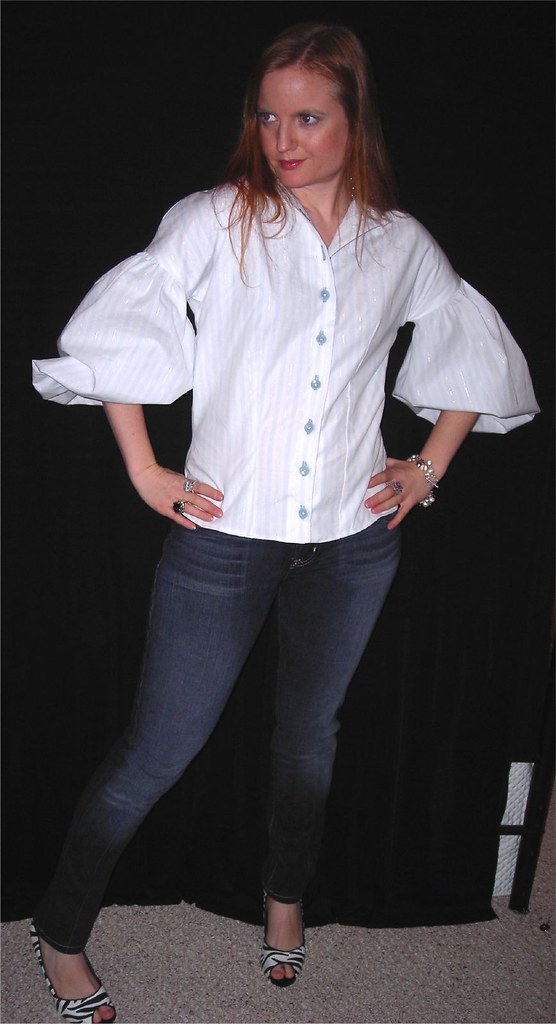


Luckily my sad little wilty bow mostly covers that up.

Also, the hem is uneven (two different lengths at the placket) and I am too lazy to fix it. Yes, I am that lazy.

I am enjoying nit-picking myself. I guess confession is good for the soul.

Saturday, June 9, 2007

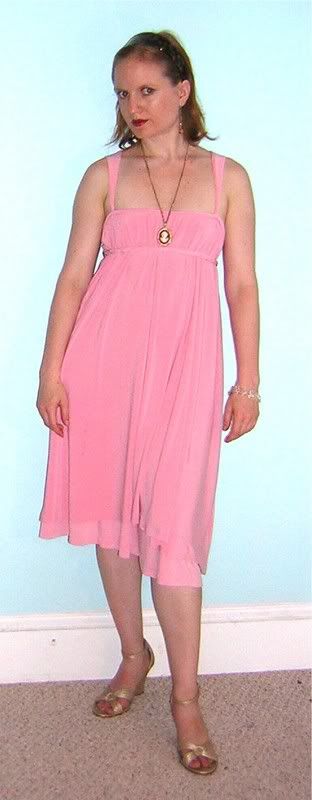
Patrones 252, #53 Calvin Klein Dress

Let's play: What's slapdash about this project?

You can read what's not slapdash about this project on Pattern Review. This is where I lift up the hems and reveal the dirty secrets.

Speaking of hems, that's what's slapdash about this project. I knew I didn't want a stitched hem because it would be too obtrusive. I was hoping for a raw edge hem--this is a knit, after all. But I can't cut straight, especially on bias cut fabric with dull scissors. I really need to get them sharpened. But that would be so un-slapdash of me. The problem is I don't know where to go to get it done, except occasionally Joann has someone come in and do it. But I'd have to leave my scissors there (the person, naturally, is not there on the weekend when people who, say, have a job can come) and I don't think I can live without them for a week.

Annnnyway, after a lot of patient chopping I realized the raw edge was never going to work. In the chopping there was a little, um, unevenness created. I decided I actually liked the top being shorter than the lining. Much of being slapdash involves labeling a mistake a "design feature" and calling it a day.

To finally make the hem I resorted to the ultimate in slapdash: fusible web. Even I hate resorting to fusible web because it says "I give up" in the biggest possible way. But hey, the hem doesn't look half bad!

This is also slapdash in that the back lining is cut on the grain, while the front, front lining, and back are bias. I didn't have enough! And this is a knit, fer crying out loud. Bias knit? Those crazy Spaniards and their incredibly awesome pattern magazines.